
Bitbol's Radical Neurophenomenology
Anomalous
Primacy of Lived Experience and Hard Problem Dissolution
This framework aims to dissolve the 'hard problem' of consciousness by emphasizing the primacy of lived experience and viewing the mind-body connection as a 'tangled dialectic' rather than a one-directional physical dependence. It advocates a radical shift in the researcher's stance away from seeking an objective solution toward exploring subjective, first-person reality.
 Michel Bitbol
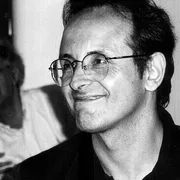 Francisco Varela
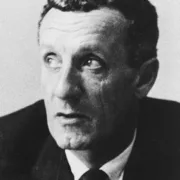 Maurice Merleau-Ponty
What consciousness is
Consciousness is identified as manifest, given reality (endo-ontology) accessible through lived, first-person experience, which conditions the constitution of objectivity. It is a dynamical and participatory conception of the body-consciousness relation.
Mind and body
Mind and body exist in a 'tangled dialectic,' where the neuro-phenomenological correlation is merely an extension of the lived sense of embodiment, rejecting one-directional material dependence.
Mechanism
The key principle is the dissolution of the hard problem by shifting the focus from an intellectual puzzle to an 'existential option,' achieved through suspending objective judgment and redirecting inquiry toward the constitution of objects from subjective experience.
Core claims
- Radical neurophenomenology advances Varela's project of criticizing and dissolving the hard problem of consciousness.
- The 'hard problem' is a fake mystery generated by the standard physicalist ontological prejudice.
- Lived experience has effective primacy over objective accounts, thus neuroscientific data should not be granted a higher ontological status than phenomenological descriptions.
- The methodology relies on mutual clarification between first-person methods (like micro-phenomenological interviews) and third-person neuroscience.
Criticisms
Criticized for avoiding an intellectual solution to the hard problem, instead deflecting it onto the plane of attitudes or being considered a 'dodge.' It requires researchers to adopt self-transformation and abandon the neutral observer stance, which is demanding.
Implications
- AI consciousness: Uncertain
- Consciousness is rooted in irreducible lived experience and a body-consciousness dialectic, making it likely resistant to simulation or computational realization, which are the basis for AI consciousness claims.
- Survival beyond death: Possible
- The radical phenomenological approach interprets altered states of consciousness (like NDEs) as potentially revealing a non-external, self-disclosing 'endo-ontology'—a mode of being that suggests profound continuity beyond standard materialist constraints.
- Meaning and purpose: Humanistic only
- The theory changes the nature of consciousness from an intellectual mystery to an 'existential option,' centering meaning in the engaged ontological approach of lived experience and subjective being (intra-ontology).
- Virtual immortality: No
- Virtual immortality requires the reduction of the first-person mental self to digital information, which is inconsistent with the theory's foundational premise regarding the primacy and non-reducibility of embodied lived experience.
Related theories
- Varela's Neurophenomenology (Extension)
- Merleau-Ponty's Embodied Perception and the Lived Body (Influence)
- Enactivism (Critique)
- Materialism (Critique)
Sources
- The tangled dialectic of body and consciousness: a metaphysical counterpart of radical neurophenomenology (2021)
- On the too often overlooked radicality of neurophenomenology, M. Bitbol, E. Antonova (2016)
- Neurophenomenology and the micro-phenomenological interview, M. Bitbol, C. Petitmengin (2017)
Explore all theories on the Consciousness Atlas · Compare Bitbol's Radical Neurophenomenology with other theories · Which theory of consciousness fits you?