
Combs’s chaotic attractor and autopoietic systems
Anomalous › Dynamic Systems
Consciousness as a Chaotic Autopoietic Attractor
This theory models consciousness, particularly the continuous flow of subjective experience, using the concepts of nonlinear dynamics and chaos theory. It posits that consciousness operates as a chaotic autopoietic attractor—a self-creating and self-maintaining system where experiential elements, such as thoughts and emotions, spontaneously organize into coherent streams of experience, often functioning near the 'edge of chaos'.
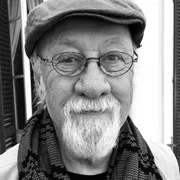 Allan Combs
What consciousness is
Consciousness is identified as a chaotic autopoietic attractor, which is a self-generating, self-maintaining system that reflects the continuous flow and internal 'clinging together' of experiential elements (thoughts, memories, and emotions).
Mind and body
Dynamic Correlation/Identity. Mental states (like emotional self-propagation) are viewed as coherent, self-organizing dynamical patterns (attractors) accompanied by specific neurochemistry, implying a strong, non-reductive correlation with physical processes.
Mechanism
The principle of the chaotic autopoietic attractor, which explains the dynamic cohesion and self-perpetuation of subjective experience, achieved by operating near the boundary between stability and chaos.
Core claims
- Consciousness is modeled as a chaotic autopoietic attractor, reflecting the continuous flow and cohesion of thoughts, memories, and emotions.
- Emotional states self-propagate and maintain resilience consistent with autopoietic attractor dynamics.
- The mind exhibits features of a chaotic system, cycling between stability and instability near the 'edge of chaos'.
Criticisms
None explicitly stated. Potential tension exists in rigorously mapping abstract mathematical properties (attractor geometry, chaos thresholds) directly onto specific qualitative subjective experiences (qualia).
Implications
- AI consciousness: Possible
- As the core mechanism relies on complex, dynamic self-organization (attractor systems), AI could become conscious if non-biological hardware can successfully replicate the necessary chaotic autopoietic dynamics operating near the brink of change.
- Survival beyond death: Uncertain
- The core mechanism (autopoiesis) is biologically defined. However, the theory is categorized under Anomalous/Altered States, which suggests a conceptual openness to expanded realities or forms of consciousness not strictly tied to the dying physical body.
- Meaning and purpose: Humanistic only
- The focus on consciousness as a self-creating, self-organizing system provides implicit meaning and value derived from the inherent coherence and resilience of the subjective stream, rather than a predetermined cosmic teleology.
- Virtual immortality: Conditional
- Possible, provided that the highly complex, time-dependent nonlinear dynamics and self-organizing structures of the chaotic autopoietic attractor can be precisely measured, duplicated, and maintained in a non-biological medium.
Related theories
- Complex Adaptive Systems Models (Overlap)
- Homeostatic (Compatible)
- William James's description of consciousness (Influence)
Sources
- States of consciousness and self-organization, A. Combs (2022)
- Autopoiesis and Cognition: the Realization of the Living, H. Maturana and F. Varela (1980)
Explore all theories on the Consciousness Atlas · Compare Combs’s chaotic attractor and autopoietic systems with other theories · Which theory of consciousness fits you?