
Near Death Experiences, Survival, Past Lives
Anomalous › Phenomenological Claims of Consciousness Separation and Persistence
Consciousness persists beyond brain death
This collection of claims and phenomena suggests that consciousness is non-physical and persists beyond biological death, drawing primarily from subjective experiences like NDEs and OBEs, or phenomena like memories of past lives. These phenomena, if veridical, fundamentally refute Materialism and support non-physicalist ontologies.
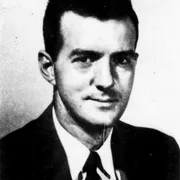 Ian Stevenson
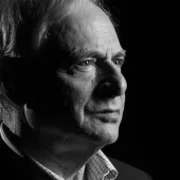 Bruce Greyson
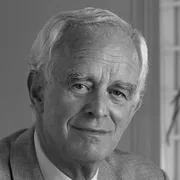 Pim van Lommel
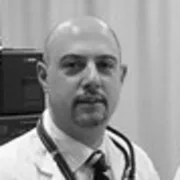 Sam Parnia
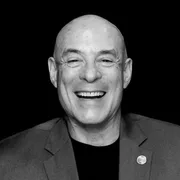 Jeffrey Mishlove
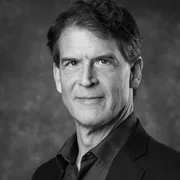 Eben Alexander
What consciousness is
The claims imply that consciousness is a non-physical entity (soul or self) that is functionally separable from the body and brain, retaining awareness and identity during biological cessation or non-functioning.
Mind and body
Separatist/Non-Reductionist. Mind/Consciousness is distinct and separable from the physical brain (Filter or Transmission model of the brain) .
Mechanism
Survival/Separation of consciousness from the brain. The brain is generally modeled as a filter, allowing a greater, non-local consciousness to manifest when the filter fails (e.g., during near-death) .
Core claims
- Consciousness and memory are retained under extreme physiological conditions, such as cardiac arrest, where brain activity is presumed lost .
- Recollection of past lives by children (CORT) suggests persistent personal identity across physical lives .
- Out-of-body experiences sometimes include verifiable observations made from a non-physical location .
Criticisms
Mainstream science views these experiences as physiological/psychological phenomena (e.g., hallucinations, oxygen deprivation, REM intrusion) . Critical counter-theories include 'super-psi' (living agents gleaning information psychically) to explain verifiable data, negating the need for post-mortem survival .
Implications
- AI consciousness: Possible
- If consciousness requires a non-physical component (soul), AI could only be conscious if complex non-biological substrates can trigger the emergence/creation of such a component (Emergent Dualism), or if consciousness is tied to an omnipresent field that AI can access .
- Survival beyond death: Yes
- Survival is the core tenet; NDEs and claims of past lives imply the persistence of the first-person conscious self beyond the dissolution of the biological brain .
- Meaning and purpose: Cosmic/Ultimate
- Survival models generally imply intrinsic worthiness, often involving spiritual growth, karmic accumulation (past lives), and communication with a transcendent reality or 'spiritual Being' .
- Virtual immortality: Not needed
- If consciousness is non-physical, the digital duplication of the brain would not preserve the original self (rendering an 'impostor' or 'zombie') . Consciousness is already naturally immortal.
Related theories
- Dualism (Compatible)
- Idealism (Compatible)
- Emergent Dualism (Compatible)
- Sheldrake's Morphic Fields (Extension)
Sources
- The Continuity of Consciousness: a concept based on scientific research on near-death experiences during cardiac arrest, P. van Lommel (2022)
- Irreducible Mind: toward a Psychology for the 21st Century, E.F. Kelly, E.W. Kelly, et al. (2007)
- Reincarnation and Biology: A Contribution to the Etiology of Birthmarks and Birth Defects, I. Stevenson (1997)
- Near-death experiences and emergent dualism, J. Kopel (2023)
- Beyond the brain—the survival of human consciousness after permanent bodily death, J. Mishlove (2021)
Explore all theories on the Consciousness Atlas · Compare Near Death Experiences, Survival, Past Lives with other theories · Which theory of consciousness fits you?