
Delaflor's Model Dependent Ontology
Challenge
Consciousness as a Language-Rendered Model of Self and World
Delaflor's Model Dependent Ontology (MDO) refuses to commit to any substrate, material, mental, or otherwise, and treats theories of consciousness as useful maps rather than discoveries of what experience is. What we call consciousness is ‘C2’, the language-driven organization in which self and world are drawn as paired, practical distinctions; beneath it lies ‘C1’, non-egoic raw experience, and beyond that an undecidable limit that can only be pointed at. Delaflor offers the framework less as a rival theory than as a device, like an extended Zen koan, for clearing the ground every theory stands on.
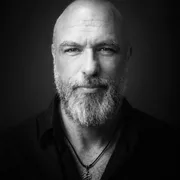 Manuel Delaflor
What consciousness is
Conventional consciousness is C2, the focused, intentional, propositional organization that arises when language extends C1, raw non-egoic experience. In C2, experience is rendered as language, self, and world, and the world is part of what C2 renders, not something outside it.
Mind and body
Delaflor sets the mind-body question aside: mind, brain, self, and world are demarcations drawn within experience for practical purposes, operative but ontologically empty. MDO rejects physicalism, idealism, panpsychism, illusionism, transcendental phenomenology, Advaita non-dual idealism, and mysterianism alike.
Mechanism
Language acting as C1's intentional extension produces C2 and, with it, the apparent split between self and world.
Core claims
- Every derivation of consciousness takes place within what can be decided, so the undecidable limit can only be pointed at, never grounded or reduced.
- A shared world emerges from coordinated maps, which accounts for the absence of a private language without positing a world separate from experiencers; its patterns still resist individual will.
- Large language models are stateless events that mimic C2 surface structures without the continuous C1 availability beneath them, so they call for a framework of Artificial Cognition, not artificial consciousness.
- A science of consciousness should model how experience varies, not try to discover what experience ultimately is.
Criticisms
Calling C1 ‘non-egoic awareness’ and ‘raw experience’ while denying that it is a ground risks reintroducing the experiential primitive MDO disowns. A framework that declines every ontological position is hard to test or refute.
Implications
- AI consciousness: Unlikely
- Delaflor argues that current language models only mimic C2 structures and lack continuous C1 availability. He treats them as artificial cognition, not consciousness.
- Meaning and purpose: Uncertain
- MDO points to an undecidable limit that cannot be named and makes no claim about ultimate purpose.
Related theories
- Dao De Jing's Constant Dao (Overlap)
- Nāgārjuna’s Empty Consciousness: Experience Without Essence (Overlap)
- Wittgenstein's Grammatical Fiction (Overlap)
- Kastrup's Analytic Idealism (Contrast)
Sources
- Model Dependent Ontology (forthcoming), Manuel Delaflor (2026)
- We Do Not Discover Reality, We Create It, Manuel Delaflor (2026)
- Theories Are Never True, They Are Only More or Less Useful, Manuel Delaflor (2026)
- Artificial Intelligence as Self-Instantiated, Temporally Continuous, Disturbance-Driven Adaptive World-Builder, Manuel Delaflor, C. Delgado-Solórzano and C. Toxtli (2025)
- Philosophical Investigations, Ludwig Wittgenstein (1953)
- I Am That, Nisargadatta Maharaj (1973)
Explore all theories on the Consciousness Atlas · Compare Delaflor's Model Dependent Ontology with other theories · Which theory of consciousness fits you?