
Fodor's Principled Abstention: Intentionality Bracketing Phenomenality
Challenge
Intentionality Explained, Phenomenal Consciousness Set Aside
Fodor deliberately declined to theorize phenomenal consciousness and argued that this was the right research strategy. His Representational Theory of Mind explains thought as computation over sentence-like mental representations in a Language of Thought, which accounts for how mental states are about things but not for why they feel like anything. On that question he was a mysterian: nobody, he said, has the slightest idea how anything material could be conscious.
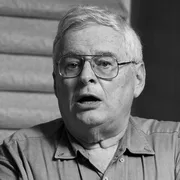 Jerry Alan Fodor
What consciousness is
Fodor offers no identity claim for phenomenal consciousness. He identifies thinking with computation over physically realized mental representations that have syntax and compositional semantics, and leaves phenomenal character out of the account on purpose.
Mind and body
Mental representations are physically realized in the brain, and mental processes are computations on them. How any material process could be conscious remains, for Fodor, wholly unknown.
Mechanism
Methodological quarantine: treat intentionality and phenomenality as separable and build a complete theory of content without invoking qualitative character.
Core claims
- The Language of Thought explains why thought is productive, systematic, and inferentially coherent.
- Encapsulated input modules explain why perceptual illusions survive contrary knowledge.
- Nobody knows how anything material could be conscious, and nobody knows what it would be like to have such an idea.
- Concentrating on intentionality while setting consciousness aside is a sound strategy, though Fodor admitted that McGinn's claim of a non-contingent link between intentional and qualitative properties in perception worried him.
Criticisms
Phenomenal-intentionality theorists such as Uriah Kriegel and Dan Zahavi argue that genuine aboutness depends on consciousness, which reverses Fodor's priority and undercuts the separability his strategy assumes. Others ask whether refusing to treat consciousness as a natural kind is principled or question-begging, since causally embedded phenomena should admit scientific study.
Implications
- AI consciousness: Uncertain
- Machines could in principle share the computational architecture of thought, but Fodor held that nobody knows how any material system could be conscious, so the question stays open.
Related theories
- McGinn's Ultimate Mystery (Mysterianism) (Overlap)
- Computational Theories (Foundation)
- Churchland’s Eliminative Materialism (Contrast)
- Zahavi’s Pre-Reflective For-Me-Ness (Critique)
Sources
- The Language of Thought, Jerry A. Fodor (1975)
- Methodological Solipsism Considered as a Research Strategy in Cognitive Psychology, Jerry A. Fodor (1980)
- The Modularity of Mind: An Essay on Faculty Psychology, Jerry A. Fodor (1983)
- Too Hard for Our Kind of Mind? (review of McGinn's The Problem of Consciousness), Jerry A. Fodor (1991)
- The Big Idea: Can There Be a Science of Mind?, Jerry A. Fodor (1992)
- The Mind Doesn't Work That Way: The Scope and Limits of Computational Psychology, Jerry A. Fodor (2000)
- Hume Variations, Jerry A. Fodor (2003)
- Phenomenal Intentionality, Uriah Kriegel (ed.) (2013)
Explore all theories on the Consciousness Atlas · Compare Fodor's Principled Abstention: Intentionality Bracketing Phenomenality with other theories · Which theory of consciousness fits you?