
Berkeley’s Immaterialist Idealism
Idealism
To Be Is to Be Perceived or to Perceive
George Berkeley holds that nothing exists but minds (spirits) and the ideas they perceive: to be is to be perceived or to perceive. Sensible objects are stable, lawful collections of ideas, not mind-independent matter behind them. God, an infinite spirit, causes and sustains these ideas, which keeps the sensory world vivid, ordered, public, and in existence when no finite mind perceives it.
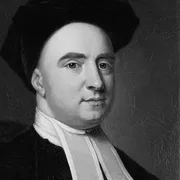 George Berkeley
What consciousness is
Phenomenal consciousness is the immediate apprehension of ideas by active finite spirits, and it is the mode in which the sensible world itself exists, not an inner representation of something beyond it.
Mind and body
Bodies, including one's own, are collections of ideas in minds. There is no material substance, so the mind-body problem becomes a relation between active spirits and the passive ideas they perceive.
Mechanism
Esse est percipi aut percipere, combined with divine causation: ideas cannot cause one another and finite spirits do not will most of them, so God produces the sensory order.
Core claims
- An idea can resemble only another idea, so the representationalist view that ideas copy unperceived matter is unintelligible.
- Primary qualities such as size, shape, and motion vary with the perceiver just as colors and tastes do, so the primary-secondary distinction collapses.
- Visual distance and magnitude are learned through correlations between visual and tactile ideas, as argued in the New Theory of Vision.
- The involuntary, lawful order of sensory ideas requires an infinite spirit as their cause.
Criticisms
Divine causation carries much of the explanatory burden. The ontology of active spirits is less accessible than the ontology of ideas, since all immediate objects of knowledge are ideas. Identifying ordinary objects with collections of ideas is hard to reconcile with contemporary scientific realism.
Implications
- AI consciousness: Unlikely
- Only spirits perceive and act, and a machine is a collection of ideas, so a machine as such could not be conscious on this view.
- Survival beyond death: Likely
- A spirit is not an idea and so is not part of the body that dies, and Berkeley's system is built to support religious belief, though survival is not argued here.
- Meaning and purpose: Cosmic/Ultimate
- Berkeley directs his project to practice and morality, starting from the nearness and omnipresence of God, whose will orders the whole sensory world.
- Virtual immortality: No
- A digital copy would be only a further collection of ideas, never an active perceiving spirit.
Related theories
- Locke’s Reflexive Consciousness and the Making of the Person (Critique)
- Descartes’s Substance Dualism (Critique)
- Malebranche’s Divine Occasionalism: Inner Sensation and Phenomenal Experience (Overlap)
- Yetter-Chappell’s Non-Theistic Idealism (Extension)
Sources
- An Essay Towards a New Theory of Vision, George Berkeley (1709)
- A Treatise Concerning the Principles of Human Knowledge, George Berkeley (1710)
- Three Dialogues Between Hylas and Philonous, George Berkeley (1713)
- Alciphron, or the Minute Philosopher, George Berkeley (1732)
- Berkeley: An Interpretation, Kenneth P. Winkler (1989)
- Berkeley’s World: An Examination of the Three Dialogues, Tom Stoneham (2002)
Explore all theories on the Consciousness Atlas · Compare Berkeley’s Immaterialist Idealism with other theories · Which theory of consciousness fits you?