
McGilchrist's Relational, Creative-Process Idealism
Idealism › Relational, Creative-Process Idealism
Consciousness is the Stuff of the Cosmos
Consciousness is irreducible, primordial, and the fundamental 'stuff' of the cosmos, viewed as a creative process. Matter is not a separate substance but a derivative 'phase' of consciousness, necessary for achieving individualized experience. The brain's primary role is to mediate and shape this omnipresent consciousness, reflected in the contrasting modes of the two cerebral hemispheres.
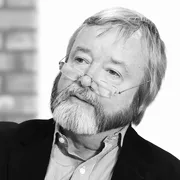 Iain McGilchrist
What consciousness is
Consciousness is identified as an irreducible, primordial, and omnipresent creative process that constitutes the cosmos. Matter is a phase of consciousness.
Mind and body
The brain mediates consciousness, shaping and actualizing the experiences felt by the body (Permitting/Constraining model). Matter (including the brain) is a phase of consciousness, akin to ice being a phase of water.
Mechanism
The principle of mediation, where the brain does not cause consciousness but permits and shapes it. Also, the creative tension arising from the opposing attentional modes of the cerebral hemispheres.
Core claims
- Consciousness is irreducible, primordial, and the stuff of the cosmos.
- Matter is a derivative phase of consciousness (like ice is a phase of water).
- The brain mediates consciousness rather than producing it.
- The two cerebral hemispheres attend to the world in opposing ways, bringing different worlds of experience (presencing vs. re-presentation) into being.
Criticisms
Critics of idealism argue it fails to explain the apparent independence and structure of the physical world. The theory's strength relies heavily on the nuanced interpretation of hemispheric specialization, which is subject to ongoing debate.
Implications
- AI consciousness: Uncertain
- Consciousness is primordial and relational, requiring complex mediation to express individuality. Mere functional computation would likely fail to capture the required properties, but an engineered system might potentially mediate consciousness if it possesses the necessary structure to do so.
- Survival beyond death: Likely
- Since consciousness is the fundamental stuff of the cosmos and primitive, the individual self, though dissolving its physical mediator (the brain), would persist within the cosmic ground of Being.
- Meaning and purpose: Cosmic/Ultimate
- The cosmos has purpose and direction, driven by the fundamental consciousness aiming to know itself and further discover value (beauty, truth, and goodness).
- Virtual immortality: Unlikely
- Consciousness is not reducible to the neural pattern (matter, being a 'phase' of consciousness, is mediated). Uploading the pattern alone would likely fail to replicate the originating conscious process, resulting in a mere abstraction or simulation without genuine subjective experience.
Related theories
- Hoffman's Conscious Realism (Overlap)
- Whitehead's Process Theory (Compatible)
- Nagel's Mind and Cosmos (Influence)
- Idealism (Extension)
Sources
- The Matter with Things: Our Brains, Our Delusions and the Unmaking of the World, I. McGilchrist (2021)
- Consciousness Is the Stuff of the Cosmos, I. McGilchrist (2021)
- The Master and His Emissary: the Divided Brain and the Making of the Western World, I. McGilchrist (2009)
Explore all theories on the Consciousness Atlas · Compare McGilchrist's Relational, Creative-Process Idealism with other theories · Which theory of consciousness fits you?