
Damasio’s Homeostatic Feelings and Emergence of Consciousness
Materialism › Homeostatic
Consciousness as Homeostatic Feelings
This theory posits that consciousness fundamentally arises from internal feelings, known as homeostatic feelings, which continuously represent the ongoing state of the organism's life relative to an ideal state (homeostasis). The spontaneous consciousness provided by these feelings offers valuable knowledge necessary for deliberate life regulation and survival.
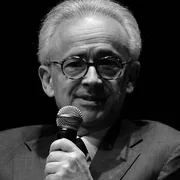 Antonio Damasio
 Hanna Damasio
What consciousness is
Consciousness is identified as homeostatic feelings—spontaneously conscious processes of a hybrid nature combining mental features and bodily features. These feelings translate fundamental homeostatic states (e.g., hunger, pain, well-being).
Mind and body
The core phenomenal processes (homeostatic feelings) are hybrid, combining mental and bodily features. The mind is inextricably linked to the biological processes of the body, particularly internal regulation (interoception).
Mechanism
The intrinsic conscious status of homeostatic feelings, which spontaneously delivers knowledge concerning life regulation and survival.
Core claims
- The fundamental root of consciousness is feelings related to the interior, homeostatic state of the organism.
- Homeostatic feelings possess an 'inherent conscious status' that spontaneously provides crucial knowledge for survival.
- Consciousness arose early in evolution via the affective/interoceptive path, preceding the cognitive path.
Criticisms
Like many biological accounts, this theory primarily focuses on the functional and adaptive role of consciousness (the 'easy problems'), potentially leaving the 'hard problem' (why homeostatic states feel like something) unexplained, though it posits that feelings inherently possess consciousness.
Implications
- AI consciousness: Conditional
- If artificial systems can achieve a substrate capable of complex homeostatic regulation and generating the requisite 'homeostatic feelings' that reflect the state of the system's 'life' (or equivalent survival imperative), then AI consciousness would be possible, consistent with Materialism.
- Survival beyond death: No
- Consciousness is fundamentally dependent on biological processes, specifically homeostatic feelings arising within the nervous system of complex organisms. There is no provision for a nonphysical component surviving the death of the biological substrate.
- Meaning and purpose: Humanistic only
- Consciousness evolved to serve life regulation and survival. As a Materialism theory, it aligns with the view that ultimate meaning/purpose are absent, but that meaning and value are created by conscious humans.
- Virtual immortality: Likely
- If the physical processes (including all mechanisms related to homeostatic feeling generation and integration with cognitive images) could be perfectly duplicated in a non-biological medium, the resultant perfect duplication of physical states would entail a perfect duplication of the mental states, thus allowing virtual immortality.
Related theories
- Friston’s Free-Energy Principle (Overlap)
- Neurobiological (Extension)
- Embodied (Compatible)
Sources
- The Feeling of what Happens: Body and Emotion in the Making of Consciousness, Antonio Damasio (1999)
- Feeling & Knowing: Making Minds Conscious, Antonio Damasio (2021)
- Feelings are the source of consciousness, Antonio Damasio and Hanna Damasio (2023)
- Homeostatic feelings and the emergence of consciousness, Antonio Damasio and Hanna Damasio (2024)
Explore all theories on the Consciousness Atlas · Compare Damasio’s Homeostatic Feelings and Emergence of Consciousness with other theories · Which theory of consciousness fits you?