
Feigl's Double Knowledge of Raw Feels
Materialism › Mind-Brain
Raw Feels and Neural Processes as One Event Known Twice
Herbert Feigl holds that ‘raw feels’, the directly lived qualities of color, pain, emotion and thought, are empirically identical with configurations of neural processes. Phenomenal and neurophysiological terms differ in meaning and evidence but refer to the same event, as ‘morning star’ and ‘evening star’ both name Venus; the subject knows it by acquaintance, science by description.
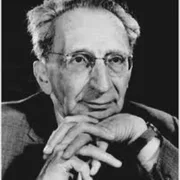 Herbert Feigl
What consciousness is
Raw feels are identical with configurational features of neural processes. The identity is empirical and contingent, not logical.
Mind and body
One referent, two epistemic routes. The only dualism Feigl allows is a dualism of evidence, never of substance or property.
Mechanism
The distinction between evidence and reference: the evidence for ascribing a mental state is not the state ascribed, and acquaintance and description can converge on a single referent.
Core claims
- Phenomenal and neurophysiological vocabularies are neither synonymous nor intertranslatable, yet can share a referent.
- Eliminative materialism and radical behaviorism are ‘reductive fallacies’ that dispose of the explanandum.
- Dualist correlation laws would be ‘nomological danglers’, and parsimony opposes positing two sets of entities where evidence is fully correlated.
- Feigl holds that the choice between monism and dualism is settled pragmatically, while specific identifications belong to science.
Criticisms
Paul Meehl's autocerebroscope thought experiment pressed Feigl to clarify how phenomenal predicates relate to raw feels, and the semantics of acquaintance remains contested. Privileging qualia as epistemically basic invites the charge of sliding toward panpsychism, which Feigl answers by calling the privilege epistemological, not ontological.
Implications
- AI consciousness: Uncertain
- Feigl identifies raw feels with configurations of neural processes and leaves the specific identifications to science, so whether a machine could have them is open.
- Survival beyond death: No
- Since raw feels are neural events, they cannot persist once the brain stops.
- Meaning and purpose: Humanistic only
- The view integrates experience into a scientific, physicalist world picture without cosmic purpose.
- Virtual immortality: Uncertain
- It depends on whether a simulation reproduces the neural configurations that raw feels are identical with, which the theory does not settle.
Related theories
- Smart’s Topic-Neutral Identity (Influence)
- Place’s Empirical Identity and the Phenomenological Fallacy (Overlap)
- Russellian Monism (Influence)
- Jackson's Representationalism and the Knowledge Argument (Contrast)
Sources
- The ‘mental’ and the ‘physical’, Herbert Feigl (1958)
- The Mental and the Physical: The Essay and a Postscript, Herbert Feigl (1967)
- The logical analysis of the psycho-physical problem, Herbert Feigl (1934)
- Mind-body, not a pseudoproblem, Herbert Feigl (1960)
- The compleat autocerebroscopist: A thought-experiment on Professor Feigl's mind-body identity thesis, P. E. Meehl (1966)
- Austria vs. Australia: Two versions of the identity theory, L. Stubenberg (1997)
- Mind in a Physical World, J. Kim (1998)
- General Theory of Knowledge, M. Schlick (1918)
Explore all theories on the Consciousness Atlas · Compare Feigl's Double Knowledge of Raw Feels with other theories · Which theory of consciousness fits you?