
Humphrey’s Mental Representations and Brain Attractors
Materialism › Higher-Order
Phenomenal Consciousness as Evolved Mental Representations in Attractors
This materialistic theory views phenomenal consciousness as a late evolutionary development, present only in certain complex species. Sensations are generated in a two-stage process: gathering sensory information, followed by an interpretive "conscious reading" that generates mental representations possessing phenomenal properties (qualia), often stabilized by complex attractor states in the brain.
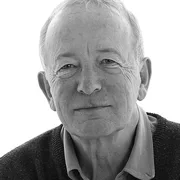 Nicholas Humphrey
What consciousness is
Consciousness is identified as mental representations (ideas we generate) of stimuli, specifically those properties arising during the interpretive stage ("conscious reading") that are stabilized into complex attractor states in the brain.
Mind and body
Mind-states (sensations/representations) are generated by the physical brain. Although phenomenal properties are not literal properties of brain states, they are mind-states (representations) dreamed up by the brain, implying dependency.
Mechanism
A two-stage processing system (sensory input followed by conscious reading/interpretation) where representations are refined and stabilized by complex brain attractor states. This process originated in the monitoring of primitive evaluative responses via 'efference copies'.
Core claims
- Consciousness is a mental representation (idea) generated by the brain, not a literal mapping of brain activity.
- Phenomenal properties (qualia) arise only at the interpretive stage of processing (conscious reading).
- The invention of the 'phenomenal self' provided adaptive benefits in the fitness game.
- The hard problem is considered 'the wrong problem' because it incorrectly seeks a neural correlate mapping to phenomenal properties.
Criticisms
A potential tension exists in how the mathematically complex attractor states give rise to the apparently unaccountable qualities of sensory qualia ('out of the blue'). Humphrey also rejects the premise of the hard problem, which remains a key tension with non-materialist positions.
Implications
- AI consciousness: Likely
- As a materialist theory where consciousness is realized by complex informational processing, representations, and attractor states in the brain, artificial systems that can replicate these mechanisms should, in principle, become conscious.
- Survival beyond death: No
- Consciousness is entirely dependent on the evolved biological brain and its specific neural mechanisms (representations and attractor states). Death of the brain entails the cessation of consciousness, consistent with materialism.
- Meaning and purpose: Humanistic only
- The theory is framed strictly within an evolutionary context, where consciousness arises for adaptive benefits in the 'fitness game,' suggesting meaning and purpose are human-created or subjective, rather than cosmic or ultimate.
- Virtual immortality: Likely
- If consciousness is wholly explainable by the specific neural patterns, representations, and attractor states generated by the brain (Materialism Theories), then a perfect duplication of these functional dynamics into a non-biological medium should preserve the first-person mental self.
Related theories
- Higher-Order (Extension)
- Dennett's Evolution of Minds (Overlap)
- Lamme's Recurrent Processing Theory (Overlap)
Sources
- Sentience: the Invention of Consciousness, Nicholas Humphrey (2023)
- The invention of consciousness, Nicholas Humphrey (2023)
- Seeing and somethingness, Nicholas Humphrey (2022)
Explore all theories on the Consciousness Atlas · Compare Humphrey’s Mental Representations and Brain Attractors with other theories · Which theory of consciousness fits you?