
LeDoux’s Higher-Order Theory of Emotional Consciousness
Materialism › Higher-Order
Consciousness as Higher-Order Representation of Emotional and Perceptual States
This theory proposes that conscious emotional feelings, such as fear, are not fundamentally different from perceptual conscious experiences, arguing that both arise from cortically based general networks of cognition (GNC) that generate higher-order representations (HORs) of lower-order information. The essence of phenomenal consciousness lies in a re-representation of a prior higher-order state, termed a HOROR (Higher-Order Representation of a Representation).
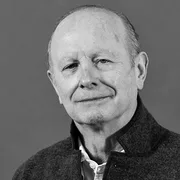 Joseph LeDoux
 Richard Brown
What consciousness is
Consciousness is identified as a third-order state (HOROR), specifically the appropriate higher-order representation (HOR) of lower-order information, instantiated by cortically based General Networks of Cognition (GNC).
Mind and body
Identity/Causal Dependence. Mental states (conscious emotional feelings and perceptual experiences) are wholly dependent on, and instantiated in, specific physical processes and networks (GNC, cortical circuits).
Mechanism
The instantiation of a Higher-Order Representation of a Representation (HOROR), which is the necessary third-order cognitive state for conscious experience. This mechanism is thought-like and non-inferential, making a nonconscious HOR introspectively aware.
Core claims
- Conscious experiences (emotional and perceptual) arise from a single system in the brain (cortically based GNC).
- Conscious feelings are higher-order states instantiated in cortical circuits.
- Phenomenal consciousness involves having a third-order state (HOROR), which is an introspective awareness of a nonconscious HOR.
- The theory rejects the traditional view that emotional states are innately programmed solely in subcortical areas.
Criticisms
Faces the general challenge directed at Higher-Order Theories (HOT) regarding the nature of the higher-order state itself, specifically how a thought-like representation makes a first-order state conscious (the 'mystery' noted by Block for general HOT). It also challenges traditional views of emotion localization.
Implications
- AI consciousness: Yes
- As a materialist, functional theory based on hierarchical information processing (GNC/HORORs), consciousness is, in principle, replicable in non-biological systems capable of instantiating the necessary computational and representational structures.
- Survival beyond death: No
- Consciousness is entirely a product of the highly complex, physically instantiated, biological systems (cortical circuits and GNC), providing no resources for survival beyond the body's physical existence.
- Meaning and purpose: Humanistic only
- Consciousness is an evolved biological mechanism that enhances survival and enables self-centered emotional states, but the theory does not posit any ultimate, cosmic, or transcendental meaning or purpose.
- Virtual immortality: Yes
- Since the first-person self is grounded in complex, functional, and representational states of the brain, a perfect duplication of these physical states via uploading technology would, in principle, preserve the self and achieve virtual immortality.
Related theories
- Higher-Order (Extension)
- Lau's Perceptual Reality Monitoring Theory (Compatible)
- First-Order (Critique)
- Traditional Higher-Order Thought Theory (HOT) (Refinement)
Sources
- A higher-order theory of emotional consciousness, J. LeDoux and R. Brown (2017)
- The Four Realms of Existence - A New Theory of Being Human, J. LeDoux (2023)
Explore all theories on the Consciousness Atlas · Compare LeDoux’s Higher-Order Theory of Emotional Consciousness with other theories · Which theory of consciousness fits you?