
Metzinger’s No-Self Representational Theory of Subjectivity
Materialism › Higher-Order
‘Phenomenal Self as Transparent Self-Model’
This theory offers a representationalist and functional analysis of subjectivity, positing that the phenomenal self—the consciously experienced first-person perspective—is not a real entity but an ongoing process, specifically the content of a transparent self-model in the brain. Conscious thought is largely characterized as a non-agentive, unintentional form of inner behavior.
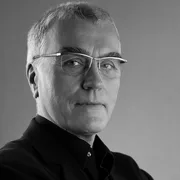 Thomas Metzinger
What consciousness is
Consciousness, or phenomenal self, is identified as the content of a “transparent self-model,” which is functionally integrated representational events (the Epistemic Agent Model, EAM).
Mind and body
The mind/phenomenal self is the result of physical, subpersonal processes in the brain (functional integration of representational events). The traditional mind-body problem arises because our phenomenal experience is rooted in the representational structure of the conscious mind itself.
Mechanism
The functioning and content of the transparent self-model (the phenomenal self) and the integration of representational events into the Epistemic Agent Model (EAM) , .
Core claims
- The phenomenal self is not a thing, but the content of a transparent self-model that functions as an ongoing process .
- Conscious cognition is often non-agentive and lacks veto-control , .
- The consciously experienced first-person perspective originates in the representational structure of the Epistemic Agent Model (EAM) .
- Empirical support comes from studies showing limitations in mental autonomy and introspective access , .
Criticisms
The core 'no-self' thesis challenges strong, pervasive intuitions about the existence of a substantial 'self' . The theory attempts to dissolve the Hard Problem by treating irreducibility intuitions as artifacts of the self-model, a move widely resisted by philosophical realists .
Implications
- AI consciousness: Likely
- As a functionalist and representational theory, if an artificial system can implement the necessary functional organization and complexity to instantiate the transparent self-model (EAM), it would achieve consciousness , .
- Survival beyond death: No
- The phenomenal self is defined as a process arising from a physical substrate (the brain/representational structure). Since there is no actual 'self' or immaterial substance, consciousness ceases upon bodily death , , .
- Meaning and purpose: Humanistic only
- Consciousness is causally necessary for optimizing flexible interactions and the emergence of cumulative culture and responsibility, providing evolved, but not cosmic, meaning .
- Virtual immortality: Likely
- If the consciousness is fundamentally the functional organization of a representational system (the self-model), then a perfect reproduction of this functional structure onto a non-biological medium should preserve the first-person perspective , .
Related theories
- Eliminative/Illusionism (Overlap)
- Functionalism (Influence)
- T. Clark's Content Hypothesis (Compatible)
- Perceptual Reality Monitoring Theory (Lau’s) (Compatible)
Sources
- Being No One: the Self-Model Theory of Subjectivity (2004)
- The subjectivity of subjective experience: a representationalist analysis of the first-person perspective (2000)
- What’s the use of consciousness? How the stab of conscience made us really conscious (with C. Frith) (2016)
- The Elephant and the Blind: the Experience of Pure Consciousness: Philosophy, Science, and 500+ Experiential Reports (2024)
Explore all theories on the Consciousness Atlas · Compare Metzinger’s No-Self Representational Theory of Subjectivity with other theories · Which theory of consciousness fits you?