
Sensorimotor (Enactive) Theory of Consciousness (Noë’s “Out of Our Heads” View)
Materialism › Embodied
Consciousness as Active World-Interaction
This theory rejects the assumption that consciousness occurs exclusively inside the brain, arguing that internal brain processes alone are insufficient to generate experience. Consciousness is fundamentally an activity or a process enacted through the dynamic, continuous, and skilled interaction between the brain, the body, and the environment.
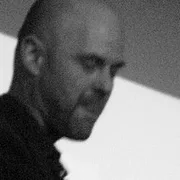 Alva Noë
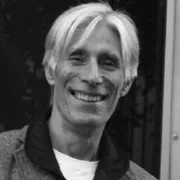 Kevin O’Regan
What consciousness is
Consciousness is identified as the activity of keeping tabs, keeping touch, paying attention to, and interacting with the world. It is the process of accessing and enabling the world to 'show up' for the organism, defined by active engagement.
Mind and body
Mind is the activity that is generated by the brain, body, and environment working together. The brain provides the necessary mechanical substrate but is not sufficient for consciousness; it is the locus of the symbols, not the consciousness itself.
Mechanism
Active and continuous engagement between the organism and its surroundings. Consciousness is located in this interaction/activity loop, not the internal brain state alone.
Core claims
- Consciousness is the activity of continuous engagement with the world.
- The density and robustness of real-life experience (in contrast to dreams) supports the necessity of external interaction.
- The brain is the mechanical locus of symbols, but the activity is consciousness itself.
Criticisms
The main tension is explaining precisely how the interaction is consciousness in a strong sense, rather than merely enabling or influencing it. Critics reject that studying internal brain events is insufficient for understanding consciousness.
Implications
- AI consciousness: Uncertain
- Standard computation is insufficient; consciousness is possible only if AI systems achieve full embodiment, skills, and continuous, autonomous interaction with a world (meeting the same demands placed on living organisms).
- Survival beyond death: No
- Consciousness is inseparable from the continuous, active physical loop involving the brain and body interacting with the world; its cessation means the termination of the conscious activity.
- Meaning and purpose: Humanistic only
- Consciousness enables the agent to acquire context, knowledge, and understanding, granting the capacity to assign meaning to interactions and guide proactive behavior, but implies no transcendent purpose.
- Virtual immortality: Unlikely
- Uploading only the brain's internal processes (the 'mechanical locus') cannot capture the non-brain-bound, external, and continuous interactive activity defined as consciousness.
Related theories
- Enactivism (Constituent Framework)
- Ecological Psychology (James J. Gibson) (Foundational Influence)
- Embodied Phenomenology (Maurice Merleau-Ponty) (Philosophical Influence)
- Extended Mind Hypothesis (Andy Clark & David Chalmers) (Partially Compatible / Overlapping)
- Susan Hurley — Action/Perception & Shared Circuits (Related / Complementary (active perception, shared circuits model))
- Internalist Materialism (Critique)
- Dualism (Critique)
Sources
- Out of Our Heads: Why You Are Not Your Brain, and Other Lessons from the Biology of Consciousness, Alva Noë (2010)
- Varieties of Presence, Alva Noë (2012)
- Is consciousness an illusion, Alva Noë (2007)
- O’Regan, K., & Noë, A. A sensorimotor account of vision and visual consciousness. Behavioral and Brain Sciences, 24(5), 939–1031. (2001)
- Noë, A. Out of Our Heads: Why You Are Not Your Brain, and Other Lessons from the Biology of Consciousness. (2009)
- Varela, F., Thompson, E., & Rosch, E. The Embodied Mind: Cognitive Science and Human Experience. (1991)
- Gibson, J.J. The Ecological Approach to Visual Perception. (1979)
- Hurley, S. L. (1998). Consciousness in Action. Harvard University Press.
- Hurley, S. (2008). The Shared Circuits Model (SCM): How control, mirroring, and simulation can enable imitation, deliberation, and mindreading. Behavioral and Brain Sciences, 31(1).
Explore all theories on the Consciousness Atlas · Compare Sensorimotor (Enactive) Theory of Consciousness (Noë’s “Out of Our Heads” View) with other theories · Which theory of consciousness fits you?