
Putnam’s Machine Functionalism
Materialism › Computational
Mental States as Functional Roles, Like Software
Putnam’s early machine functionalism defines mental states by their functional roles, the causal relations among sensory inputs, internal states, and motor outputs, not by what they are made of. Since the same role can be filled by very different physical systems, pain could exist in octopuses, aliens, or computers, which led Putnam to reject mind-brain identity theory. He later rejected strict functionalism as blind to meaning, embodiment, and qualitative experience, and moved to a ‘liberal functionalism’ and pragmatic pluralism.
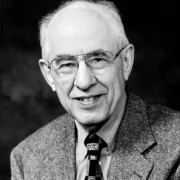 Hilary Putnam
What consciousness is
A mental state is a functional state of a system, fixed by its causal relations to inputs, outputs, and other internal states. In Putnam’s analogy, the mind is software and the brain is the hardware it runs on.
Mind and body
Mental states are realized by physical states but not identical with any particular kind of them. Putnam always rejected substance dualism, and late in his career he denied that mental phenomena could be fully described by a single fundamental physical theory.
Mechanism
Multiple realizability. The same mental state can be realized in different physical systems as long as their internal states play the same functional role.
Core claims
- The functional organization of a system is the set of causal relations among its sensory inputs, motor outputs, and internal states, and mental states are defined by it.
- Pain linked to C-fiber firing in mammals could be realized in creatures with different biology, so mental states are not identical with specific brain states.
- Putnam later argued that semantic externalism undercuts functionalism, because functional states are internal while mental content depends on the environment.
- In his late work, Putnam held that functionalism is not a complete philosophy of mind and defended a liberal functionalism grounded in embodied, environment-involving capacities.
Criticisms
Putnam became his own main critic. He argued that strict functionalism oversimplifies mental phenomena, ignores the semantic and intentional aspects of thought, and cannot capture qualitative experience.
Implications
- AI consciousness: Possible
- Multiple realizability lets mental states ‘run’ on computers as well as brains. Putnam’s later doubts that functionalism captures qualia and meaning leave machine consciousness open.
- Survival beyond death: Unlikely
- Putnam rejected substance dualism, so mental states need some physical system to realize them, and nothing in the view supports survival without one.
- Meaning and purpose: Humanistic only
- Putnam’s pragmatic pluralism treats mental talk as a human conceptual scheme suited to human purposes, with no appeal to cosmic purpose.
- Virtual immortality: Possible
- On machine functionalism, reproducing a mind’s functional organization in another substrate would reproduce its mental states, though Putnam’s later externalism ties content to the world as well.
Related theories
- Functionalism (Foundation)
- Smart’s Topic-Neutral Identity (Critique)
- Lewis’s Analytic Functionalism and Causal-Role Identity Theory (Contrast)
- Turing’s Imitation, Machine Thought, and the Hidden Mind (Influence)
Sources
- Putnam’s Machine Functionalism (Landscape of Consciousness entry), Hilary Putnam (1988)
Explore all theories on the Consciousness Atlas · Compare Putnam’s Machine Functionalism with other theories · Which theory of consciousness fits you?