
Quine’s Naturalized Mind and the Demoted Phenomenal
Materialism › Mind-Brain
Consciousness as a Bodily State Described in a Second-Grade Idiom
Quine holds that consciousness is real but wholly bodily, a condition of the nervous system, and that each mental event is identical with a physical event even when mental kinds cannot be translated into neurological kinds. His naturalism starts from a physical organism stimulated by a public world, so talk of private sense qualities becomes a late, derivative idiom. He explains how stimulation, behavioral dispositions, and public language support knowledge and mental attribution, but leaves open why neural activity feels like anything.
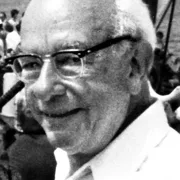 Willard Van Orman Quine
What consciousness is
Consciousness is a state of the body, specifically of the nervous system. Quine calls this the identity theory of mind: ‘mental states are states of the body.’
Mind and body
Token identity without essences. Each particular thought, perception, or feeling is a physical event in an organism, but mental vocabulary groups those events in ways that need not match any single neural type, a position close to Davidson’s anomalous monism.
Mechanism
Naturalized epistemology combined with an extensional standard for ontology. Mental states are physical, and phenomenal talk is relegated to a second-grade idiom because it fails extensionality.
Core claims
- Philosophy has no standpoint outside science, so epistemology and psychology are chapters of natural science continuous with biology and physics.
- Each mental event is identical with a physical event, though mental kinds need not map onto single neural kinds.
- Intensional and mentalistic idioms are referentially opaque and belong to a second grade of language unfit for serious ontology.
- Quine calls consciousness a genuine mystery and does not eliminate it, while insisting that whatever it is, it is a bodily and neural state.
Criticisms
Quine offers no account of why neural states are felt, and critics ask whether moving phenomenal talk to the wrong side of a methodological boundary dissolves the hard problem or evades it. His demotion of qualia can be mistaken for eliminativism, which he explicitly rejects.
Implications
- AI consciousness: Uncertain
- Quine ties mental states to the states of organisms and did not address machines, and his token identity gives no rule for which physical systems count as conscious.
- Survival beyond death: No
- Since consciousness is a condition of the nervous system, it follows from the view that nothing survives the body’s death.
- Meaning and purpose: Humanistic only
- Quine’s naturalism admits only what our best science describes, which leaves no room for cosmic purpose.
- Virtual immortality: Uncertain
- Mental states are bodily states, and Quine says nothing about whether a non-biological copy would share them.
Related theories
- Davidson's Anomalous Monism (Overlap)
- Quine's Linguistic Demotion of Phenomenal Consciousness (Extension)
- Churchland’s Eliminative Materialism (Contrast)
- Smart’s Topic-Neutral Identity (Compatible)
Sources
- Word and Object, W. V. O. Quine (1960)
- Epistemology Naturalized, W. V. O. Quine (1969)
- Mind and Verbal Dispositions, W. V. O. Quine (1975)
- Quiddities: An Intermittently Philosophical Dictionary, W. V. O. Quine (1987)
- Pursuit of Truth, W. V. O. Quine (1990)
- From Stimulus to Science, W. V. O. Quine (1995)
- Science and Sensibilia: The 1980 Immanuel Kant Lectures, W. V. O. Quine (ed. R. Sinclair) (2019)
- Quine, Ontology, and Physicalism, F. Janssen-Lauret (2019)
- Willard Van Orman Quine (Stanford Encyclopedia of Philosophy), P. Hylton and G. Kemp (2023)
Explore all theories on the Consciousness Atlas · Compare Quine’s Naturalized Mind and the Demoted Phenomenal with other theories · Which theory of consciousness fits you?