
Sheldrake’s Self-Organizing Systems at all Levels of Complexity Theory
Panpsychism › Panpsychism (Self-Organizing Systems)
‘Mind or Consciousness at all Levels of Nature’
This is a robust form of panpsychism positing that consciousness or 'mind-like organization' exists throughout nature, residing in all self-organizing systems, from atoms and cells to cosmological entities like the sun and galaxies. Consciousness is defined idiosyncratically as the capacity for making choices among possible future states that are not fixed.
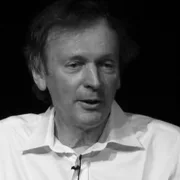 Rupert Sheldrake
What consciousness is
Consciousness is the intrinsic property or organization of self-organizing systems, defined by its function of enabling choice among future possibilities that are not fixed.
Mind and body
Consciousness and physical reality 'go hand in hand' . Electrical fields are proposed as the interface or medium mediating between physical structures and consciousness, but are not consciousness itself .
Mechanism
The capacity of a system to operate in the realm of future possibilities that are not fixed. This capacity enables the system to make choices . Electrical fields are the proposed interface mediating this process .
Core claims
- Consciousness is a form of mind/consciousness found in self-organizing systems at all levels of complexity (e.g., sun, galaxies) .
- Consciousness is fundamentally linked to the ability to make choices among alternative, non-fixed possibilities .
- Electrical fields act as the key interface mediating consciousness and physical structure .
Criticisms
Criticized for being astonishing and highly speculative, particularly in attributing mind/consciousness to cosmological systems like the sun . The extent of choice in simple systems like electrons is considered 'arguable and probably undecidable' .
Implications
- AI consciousness: Possible
- If consciousness is a general property of complex, self-organizing systems regardless of biological substrate (as exemplified by the sun having a mind), then a sufficiently complex self-organizing artificial system or network could potentially achieve consciousness .
- Survival beyond death: Likely
- As a form of panpsychism, the components of consciousness are fundamental and exist universally. Individual consciousness might dissolve back into the nesting of consciousnesses or the mind-like organization of the entire universe .
- Meaning and purpose: Cosmic/Ultimate
- The theory posits mind-like organization for the entire universe, suggesting this cosmic consciousness plays an important part in the universe’s evolution, implying inherent purpose or direction .
- Virtual immortality: Possible
- Consciousness is tied to organization mediated by electrical fields . If this specific organizational pattern and the corresponding electrical field interface could be digitally or artificially reproduced, virtual continuation might be possible, assuming the underlying 'possibilities' realm is accessible.
Related theories
- Morphic Fields (Related (Sheldrake's other work))
- Panpsychism (Overlap (Robust Form))
- Cosmopsychism (Overlap (Extends consciousness to the universe as a whole))
- Electromagnetic (Overlap (EM fields serve as interface))
Sources
- Sheldrake’s self-organizing systems at all levels of complexity
- How much more to physical reality? Rupert Sheldrake (2007)
- Is consciousness fundamental? Rupert Sheldrake (2007)
- Is the sun conscious? Rupert Sheldrake (2021)
Explore all theories on the Consciousness Atlas · Compare Sheldrake’s Self-Organizing Systems at all Levels of Complexity Theory with other theories · Which theory of consciousness fits you?