
Bitbol's Radical Neurophenomenology
Phenomenology
Effective Primacy of Lived Experience
This theory proposes a radical dissolution of the hard problem of consciousness by prioritizing the effective primacy of lived experience over any objective account. It asserts that neuroscientific data and phenomenal descriptions are ontologically equivalent, arising from a 'tangled dialectic' between body and consciousness, rather than consciousness fundamentally depending on the brain.
 Michel Bitbol
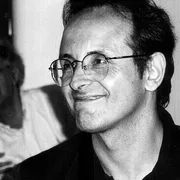 Francisco Varela
What consciousness is
Consciousness is the effective primacy of lived experience, defining reality as that which is given and manifest, conditional upon which objectivity is constituted by extracting structural invariants.
Mind and body
A 'tangled dialectic of body and consciousness' or a 'dynamical and participatory conception.' The neuro-phenomenological correlation is viewed as an extension of the lived sense of embodiment, not a sign of one-directional dependence on the brain.
Mechanism
Radical dissolution of the Hard Problem, achieved by relocating the issue from an intellectual puzzle concerning objective origin onto the plane of existential attitudes and self-transformation.
Core claims
- The standard physicalist formulation of the hard problem generates a 'fake mystery'.
- The effective primacy of lived experience conditions all other accounts of consciousness.
- Neuroscientific data and phenomenological descriptions possess equal ontological status.
- Evidence derives from methodology designed to faithfully explore lived experience (micro-phenomenological interviews).
Criticisms
The approach runs the risk of 'being either ignored or considered as a dodge' because it requires researchers to abandon the stance of neutral observers and seek self-transformation. It rejects standard physicalist monism and property dualism.
Implications
- AI consciousness: Uncertain
- Consciousness requires a 'tangled dialectic of body and consciousness' and prioritizing lived, subjective experience, which are generally antithetical to purely objective/computational accounts required for standard AI consciousness models. Consciousness is not fundamentally computational.
- Survival beyond death: Possible
- The approach rejects the one-directional, fundamental dependence of consciousness on the bodily brain, viewing neuro-phenomenological correlation as extension of embodiment. This conceptual space suggests non-physicalist persistence may be possible, especially given the framework's use in interpreting altered states of consciousness.
- Meaning and purpose: Humanistic only
- The approach transforms the hard problem into an 'existential option' and focuses on Merleau-Ponty’s ‘intra-ontology’ (the process of what it is like to be), suggesting meaning is intrinsically tied to lived being and self-disclosure.
- Virtual immortality: Unlikely
- Virtual immortality relies on functionalist duplication, but this theory asserts the 'effective primacy of lived experience' and embodiment. Uploading objective data would likely miss the irreducible, subjective mode of being (endo-ontology) required for identity preservation.
Related theories
- Varela's Neurophenomenology (Influence)
- Enactivism (Critique (more radical dissolution))
- Merleau-Ponty's Embodied Perception and the Lived Body (Influence)
- Materialism (Critique)
Sources
- The tangled dialectic of body and consciousness: a metaphysical counterpart of radical neurophenomenology (2021)
- On the too often overlooked radicality of neurophenomenology (2016)
- Neurophenomenology and the micro-phenomenological interview (2017)
- Review of waking, dreaming, being: Self and Consciousness in neuroscience, meditation, and philosophy by evan Thompson (2015)
Explore all theories on the Consciousness Atlas · Compare Bitbol's Radical Neurophenomenology with other theories · Which theory of consciousness fits you?