The Consciousness Atlas is an interactive web app that visualizes more
than 450 theories of consciousness. It is based on Robert Lawrence
Kuhn's 2024 paper,
"A Landscape of Consciousness". The Atlas maps theories that address phenomenal consciousness - the
subjective feel of experience, such as the redness of red.
What the Atlas is
The Atlas is a visual reference built on Kuhn's taxonomy. It presents
the full set of theories at once so you can explore the field visually
and open any theory to read its entry, like an encyclopedia with
structured entries. Each theory entry shows a concise identity line,
conceptual ground, suggested mechanism, empirical notes, implications,
and sources.
Why this exists
Consciousness is studied across disciplines - neuroscience,
philosophy, and sometimes spiritual or anomalous-state research.
Kuhn's paper collects and organizes hundreds of theories along a
spectrum from most physical to least physical. The Atlas puts that
organization into a visual form so readers, students, and researchers
can quickly see how different positions relate and where each theory
sits on the spectrum.
How it works
Theories are grouped into eleven main categories, arranged from physical to nonphysical: Materialism, Non-Reductive Physicalism, Quantum and Dimensions, Information, Panpsychism, Neutral Monism, Dualism, Idealism, Phenomenology, Anomalous States, and Challenge Theories. The app shows the whole map at once. Click any theory to read its structured entry, which includes references to canonical sources and named thinkers.
Who it is for
- Students learning philosophy of mind and cognitive science
-
Researchers and lecturers looking for an at-a-glance comparative
resource
-
Journalists and writers who need a quick reference to the range of
positions
-
Curious readers who want a clear view of what people mean when they
talk about consciousness
What the Atlas does not do
The Atlas does not endorse or rank theories. It is a visualization and
reference based on Kuhn's taxonomy - collect and present, not judge.
It does not attempt to settle the hard problem of consciousness. It is
a tool for exploration and comparison.
A note from Kuhn
Kuhn explicitly states the project's purpose: "collect and categorize,
not assess and adjudicate." The Consciousness Atlas follows that
approach. The data and structure are derived from Kuhn's paper;
feedback and suggested corrections are welcome, but the app is a
visualization layer on top of Kuhn's work.
Kuhn was not involved in the design or content of the Consciousness
Atlas, other than his original paper, 'A Landscape of Consciousness,'
which is the sole source.
FAQ
What is phenomenal consciousness?
Phenomenal consciousness refers to subjective experience - the
qualitative feel of being aware, like the taste of coffee or the
redness of red.
How many theories does the Atlas include?
The Atlas visualizes more than 450 individual theories, grouped into eleven broad categories.
Does the Atlas show which theory is true?
No. The Atlas presents theories neutrally. It is a map, not an
argument for any single position.
Is the Atlas academic?
The Atlas is based on an academic source - Robert Kuhn's 2024 paper,
"A Landscape of Consciousness" - and links to canonical sources
where available.
Summary
The Consciousness Atlas is a straightforward visualization tool: it
presents Kuhn's taxonomy as a single, explorable map and lets users
open individual theory entries to read structured, referenced
summaries. It is designed to make this complex field easier to survey
and to serve as a practical reference.
D.W. Smith’s Three-Facet Ontological Phenomenology
Phenomenology
Consciousness as Form, Appearance, and Substrate
David Woodruff Smith analyzes consciousness through three facets of one activity: its form (intentionality), its appearance (how it is experienced, including qualia), and its substrate (its physical, biological, and cultural basis). He holds that an act is conscious because it carries inner awareness of itself as a modal character, part of the way it is performed, rather than through a separate higher-order state.
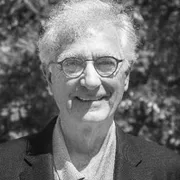 David Woodruff Smith
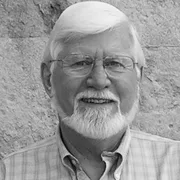 Ronald McIntyre
What consciousness is
Consciousness is a structured, world-involving activity with three inseparable facets: intentional form, phenomenal appearance, and a natural (physical, biological, cultural) substrate.
Mind and body
Smith compares the three facets to a computer’s program, interface, and hardware: one activity described three ways. Consciousness rests on a natural substrate but cannot be reduced to it, and no dualism is needed.
Mechanism
Inner awareness as a modal character with reflexive content: a conscious act is aware of itself in the manner it occurs, with no higher-order monitoring.
Core claims
- Every entity, including consciousness, can be distinguished into form, appearance, and substrate.
- A mental act is conscious when it includes awareness of its own occurring as part of its modal character.
- Thinking and judging have phenomenal character as well as sensing.
- Physicalism that studies only substrate and constructivism that studies only discourse both leave out consciousness itself.
Implications
- AI consciousness: Uncertain
- The program-interface-hardware analogy suggests the facets could in principle come apart from biology, but Smith ties consciousness to biological and cultural life and does not address machines.
Related theories
Sources
- Three Facets of Consciousness, David Woodruff Smith (2001)
- Mind World: Essays in Phenomenology and Ontology, David Woodruff Smith (2004)
- Consciousness with Reflexive Content, David Woodruff Smith (2005)
- Phenomenal Intentionality, Inner Awareness, and the Given, David Woodruff Smith (2021)
- Constitution Through Noema and Horizon: Husserl's Theory of Intentionality, David Woodruff Smith (2023)
- Husserl and Intentionality: A Study of Mind, Meaning, and Language, David Woodruff Smith and Ronald McIntyre (1982)
- Subjectivity and Selfhood: Investigating the First-Person Perspective, D. Zahavi (2005)
- Self-Representational Approaches to Consciousness, U. Kriegel and K. Williford (eds.) (2006)
- D.W. Smith’s Three-Facet Ontological Phenomenology, Landscape of Consciousness, Robert Lawrence Kuhn
Explore all theories on the Consciousness Atlas · Compare D.W. Smith’s Three-Facet Ontological Phenomenology with other theories · Which theory of consciousness fits you?
