The Consciousness Atlas is an interactive web app that visualizes more
than 450 theories of consciousness. It is based on Robert Lawrence
Kuhn's 2024 paper,
"A Landscape of Consciousness". The Atlas maps theories that address phenomenal consciousness - the
subjective feel of experience, such as the redness of red.
What the Atlas is
The Atlas is a visual reference built on Kuhn's taxonomy. It presents
the full set of theories at once so you can explore the field visually
and open any theory to read its entry, like an encyclopedia with
structured entries. Each theory entry shows a concise identity line,
conceptual ground, suggested mechanism, empirical notes, implications,
and sources.
Why this exists
Consciousness is studied across disciplines - neuroscience,
philosophy, and sometimes spiritual or anomalous-state research.
Kuhn's paper collects and organizes hundreds of theories along a
spectrum from most physical to least physical. The Atlas puts that
organization into a visual form so readers, students, and researchers
can quickly see how different positions relate and where each theory
sits on the spectrum.
How it works
Theories are grouped into eleven main categories, arranged from physical to nonphysical: Materialism, Non-Reductive Physicalism, Quantum and Dimensions, Information, Panpsychism, Neutral Monism, Dualism, Idealism, Phenomenology, Anomalous States, and Challenge Theories. The app shows the whole map at once. Click any theory to read its structured entry, which includes references to canonical sources and named thinkers.
Who it is for
- Students learning philosophy of mind and cognitive science
-
Researchers and lecturers looking for an at-a-glance comparative
resource
-
Journalists and writers who need a quick reference to the range of
positions
-
Curious readers who want a clear view of what people mean when they
talk about consciousness
What the Atlas does not do
The Atlas does not endorse or rank theories. It is a visualization and
reference based on Kuhn's taxonomy - collect and present, not judge.
It does not attempt to settle the hard problem of consciousness. It is
a tool for exploration and comparison.
A note from Kuhn
Kuhn explicitly states the project's purpose: "collect and categorize,
not assess and adjudicate." The Consciousness Atlas follows that
approach. The data and structure are derived from Kuhn's paper;
feedback and suggested corrections are welcome, but the app is a
visualization layer on top of Kuhn's work.
Kuhn was not involved in the design or content of the Consciousness
Atlas, other than his original paper, 'A Landscape of Consciousness,'
which is the sole source.
FAQ
What is phenomenal consciousness?
Phenomenal consciousness refers to subjective experience - the
qualitative feel of being aware, like the taste of coffee or the
redness of red.
How many theories does the Atlas include?
The Atlas visualizes more than 450 individual theories, grouped into eleven broad categories.
Does the Atlas show which theory is true?
No. The Atlas presents theories neutrally. It is a map, not an
argument for any single position.
Is the Atlas academic?
The Atlas is based on an academic source - Robert Kuhn's 2024 paper,
"A Landscape of Consciousness" - and links to canonical sources
where available.
Summary
The Consciousness Atlas is a straightforward visualization tool: it
presents Kuhn's taxonomy as a single, explorable map and lets users
open individual theory entries to read structured, referenced
summaries. It is designed to make this complex field easier to survey
and to serve as a practical reference.
Eagleman’s Possibilianism
Challenge
‘Consciousness as High-Level Abstract Representation’
This perspective advocates for intellectual openness (Possibilianism) regarding consciousness, rejecting rigid metaphysical dogmas. Mechanistically, it views consciousness as a highly abstract, high-level representation (akin to a CEO) that filters massive underlying neural processes, serving primarily to monitor goal success and intervene during surprising events. The theory emphasizes that while the mind is integrally dependent on the brain, the nature of subjective experience (qualia) remains a profound, perhaps conceptually insoluble, mystery.
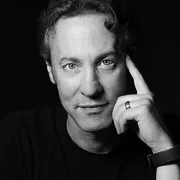 David Eagleman
What consciousness is
Consciousness is identified as a high-level, abstract representation of underlying neural activity, necessary for summarizing complexity and setting long-term goals.
Mind and body
Integral Dependence. Consciousness is integrally dependent on the brain, as demonstrated by the effects of brain damage, but the dependence relationship is explicitly left as an open question (i.e., necessity vs. sufficiency).
Mechanism
The 'CEO Model' or 'high-level abstraction,' wherein consciousness functions as a manager concerned only with complex outcomes and setting long-term goals, generally ignoring the underlying low-level machinery unless surprised.
Core claims
- Consciousness is an abstracted, high-level representation (CEO Model).
- Consciousness is profoundly mysterious; we cannot yet imagine a theory that explains the 'feel'.
- The mind is integrally dependent on the brain (supported by clinical evidence of brain damage).
Criticisms
Critics note that the stance is a diagnosis of the problem rather than a solution, offering philosophical openness without scientific prescription. It is fundamentally skeptical of current reductionist claims.
Implications
- AI consciousness: Conditional
- If consciousness is primarily a high-level abstractive function, a sufficiently complex AI could instantiate this function. However, the mystery of the subjective 'feel' (qualia) remains an open conceptual barrier.
- Survival beyond death: Unlikely
- The mind is explicitly considered 'integrally dependent on the brain.' However, the Possibilian philosophy allows that future science may reveal currently unimaginable non-physical components that permit survival.
- Meaning and purpose: Uncertain
- As a skeptical challenge theory, it avoids cosmic or ultimate commitment (Possibilianism). Meaning is derived humanistically from the function of consciousness (setting goals and executing agency).
- Virtual immortality: Possible
- If consciousness is successfully reduced to high-level abstract representation that rides on biological machinery, these representations could, in principle, be uploaded, provided technological complexity is overcome and the subjective 'feel' is preserved.
Related theories
- Dennett's Multiple Drafts Model (Overlap (in reducing consciousness to a necessary functional/representational mechanism))
- Challenge (Overlap (in concluding that the fundamental nature of qualia may be conceptually inaccessible))
- Materialism (Critique (Challenges the sufficiency of materialism despite accepting dependence on the brain))
Sources
- Beyond God and atheism: why I am a ‘possibilian’ (2010)
- What is Consciousness? (Closer To Truth) (2011)
- Is brain and mind the same thing? (Closer To Truth) (2011)
Explore all theories on the Consciousness Atlas · Compare Eagleman’s Possibilianism with other theories · Which theory of consciousness fits you?
