
Dennett’s Multiple Drafts Model
Materialism › Computational
Consciousness as Multiple Drafts and Narrative Gravity
This neurobiological theory rejects the idea of a central ‘Cartesian Theater’ where consciousness is observed. Instead, it posits that conscious content arises from parallel, multi-track streams of information processing ('multiple drafts') that compete for attention, with the winning draft achieving 'fame in the brain'. The continuous integration of these moments forms the subjective sense of self, which is characterized as a 'center of narrative gravity'.
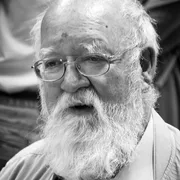 Daniel Dennett
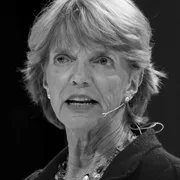 Patricia Churchland
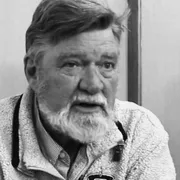 Paul Churchland
 Keith Frankish
What consciousness is
Consciousness is identified as a continually revised 'narrative stream or sequence' resulting from parallel interpretation processes in the brain. Subjective phenomenal properties (qualia) are defined as 'user-illusions' or incoherent neural constructs.
Mind and body
Identity/Reduction. Mental states are fully reducible to physical states, and the common-sense view of mind (folk psychology) is radically false, eventually to be displaced by neuroscience.
Mechanism
The suppression of the 'Cartesian Theater' metaphor. The mechanism involves the competition among different brain regions/modules (drafts) for processing resources, resulting in 'fame in the brain' for the winner, which determines the conscious moment's content.
Core claims
- There is no 'Cartesian Theater' or inner witness viewing conscious experience.
- Consciousness is composed of 'multiple drafts' competing for 'fame in the brain'.
- The subjective self is a functional construct ('center of narrative gravity').
- Qualia are rejected as illusory and incoherent properties.
Criticisms
The main criticism is that the theory fails to address phenomenal consciousness (the hard problem) by declaring it an illusion, leading critics to argue that Dennett is solving the 'easy problems' but avoiding the core mystery. His denial of qualia is considered a critical move requiring adherence to counterintuitive premises.
Implications
- AI consciousness: Yes
- As a strong materialist theory rooted in functionalism/computation, it holds that consciousness is entirely physical and computational functionalism is true. Therefore, non-biological intelligences achieving super-strong AI must eventually achieve consciousness.
- Survival beyond death: No
- In Materialism Theories, the death of the biological brain and body results in irrevocable and permanent non-existence of the person.
- Meaning and purpose: Humanistic only
- Materialism Theories do not rationalize ultimate cosmic meaning or purpose, emphasizing instead the humanistic meaning and value that individuals create for themselves.
- Virtual immortality: Yes
- If consciousness is wholly physical and reducible to information processing (as the theory holds), the first-person mental self would be uploadable/duplicable to a non-biological medium, making virtual immortality attainable, given sufficient technology.
Related theories
- Eliminative/Illusionism (Overlap (Core philosophical basis))
- Graziano's Attention Schema Theory (Similarity (Functionalist approach))
- Baars's and Dehaene's Global Workspace Theory (Comparison (Both reject Cartesian Theater and focus on informational access, though differing on specifics))
- Higher-Order (Overlap (Dennett’s model often considered a form of Higher-Order theory in prioritizing cognitive content))
Sources
- Consciousness Explained, Daniel C. Dennett (1992)
- From Bacteria to Bach and Back: The Evolution of Minds, Daniel Dennett (2017)
- Eliminative Materialism and the Propositional Attitudes, Paul Churchland (1981)
Explore all theories on the Consciousness Atlas · Compare Dennett’s Multiple Drafts Model with other theories · Which theory of consciousness fits you?