
Pinker’s Naturalism
Challenge
Brain-Bound Access, Mysterian-Light Phenomenality
Steven Pinker explains access consciousness computationally, as information made globally available to the brain's specialized systems, and holds that all evidence ties consciousness to neural activity. He takes a ‘mysterian-light’ view of phenomenal consciousness: its felt character is real and depends on the brain, but our evolved minds may lack the concepts to understand why.
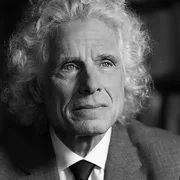 Steven Pinker
What consciousness is
Access consciousness is information posted in a common format that perception, memory, language, planning, and action systems can all use. Phenomenal consciousness depends entirely on the brain's information processing, but Pinker calls it sui generis.
Mind and body
Consciousness is inseparable from brain activity and is no ethereal substance using the brain as an instrument. In 2025 Pinker added that phenomenal consciousness may not fit causation, reduction, emergence, or realization the way water fits H₂O.
Mechanism
Global workspace or ‘blackboard’ access in the style of Baars and Dehaene, which acts as an executive summary that prevents information overload and enables flexible behavior.
Core claims
- Convergent neuroscientific evidence shows no credible case of consciousness operating independently of neural processes.
- Consciousness requires neither language nor self-awareness, since infants, animals, and aphasic patients may be conscious.
- The hard problem involves no paranormal phenomena, exotic quantum physics, or immaterial soul, and invoking a soul only renames the mystery.
- Black holes and the origin of life are as strange as consciousness; it seems uniquely odd mainly because we are the ones who have it.
Criticisms
Pinker offers a synthesis of existing views, not a new mechanistic theory of phenomenal consciousness. Calling sentience sui generis while insisting it depends entirely on the brain leaves its ontological status unsettled.
Implications
- AI consciousness: Possible
- Since access consciousness is information processing in a computational mind, a machine could in principle have it. Whether such a machine would feel anything falls under the hard problem Pinker thinks we may never solve.
- Survival beyond death: No
- Pinker holds that consciousness depends entirely on neural activity and rejects the immaterial soul, so nothing survives the brain's death.
- Meaning and purpose: Humanistic only
- The capacity to suffer, shared by beings with similar neural architecture, replaces an immortal soul as the basis of moral concern.
- Virtual immortality: Uncertain
- A computational mind could in principle be reproduced, but whether the copy would have phenomenal experience is the question Pinker leaves open.
Related theories
- Baars's and Dehaene's Global Workspace Theory (Compatible)
- McGinn's Ultimate Mystery (Mysterianism) (Influence)
- Dennett’s Illusionism (Contrast)
- Computational Theories (Overlap)
Sources
- How the Mind Works, Steven Pinker (1997)
- The Mystery of Consciousness (Time), Steven Pinker (2007)
- Science Is Not Your Enemy (The New Republic), Steven Pinker (2013)
- Steven Pinker: On the Problem of Consciousness (interview by Tony Sobrado, The Montréal Review), Steven Pinker (2025)
- Can We Solve the Mind–Body Problem?, Colin McGinn (1989)
Explore all theories on the Consciousness Atlas · Compare Pinker’s Naturalism with other theories · Which theory of consciousness fits you?