
Baars’s and Dehaene’s Global Workspace Theory
Materialism › Neurobiological
Consciousness as Global Information Accessibility
This theory posits that conscious awareness is constituted by specific multi-sensory, multi-cognitive information that achieves brain-wide presence and broad accessibility. It conceptualizes consciousness as an inner 'theater' where this information is globally broadcast, reconciling the limited capacity of momentary conscious content with vast long-term memory access.
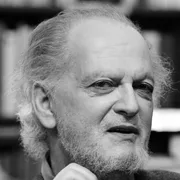 Bernard Baars
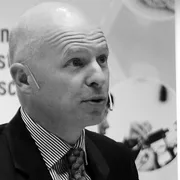 Stanislas Dehaene
What consciousness is
Consciousness is identified as the instantaneous global availability and broad accessibility of specific, integrated information across numerous specialized modular systems in the brain.
Mind and body
Identity/Correlation. The mind (conscious awareness) is identified as, or strongly correlates with, the specific, biologically realized processes of global information broadcasting in the brain.
Mechanism
Global broadcasting and accessibility of information, allowing a single coherent content to be made available to many specialized, unconscious modules simultaneously.
Core claims
- Conscious awareness consists of the brain-wide presence and broad accessibility of specific multi-sensory, multi-cognitive information.
- Global broadcasting constitutes consciousness, rather than being merely caused by it.
- Consciousness is a strictly biological phenomenon consistent with neurobiological data.
- Novel machine architectures must use global workspace computations to achieve consciousness.
Criticisms
Criticized for focusing on 'access' rather than genuine phenomenal experience, exemplified by the critique that the theory is 'all about access but not about seeing'. It faces tension regarding whether global broadcasting is necessary or merely a consequence of consciousness.
Implications
- AI consciousness: Yes
- Since the theory defines consciousness in terms of information-processing computations and architectures, and proponents suggest novel machine architectures could be based on these computations, AI consciousness is possible in principle.
- Survival beyond death: No
- Consciousness is understood as being entirely dependent on specific, complex biological brain processes, which cease upon biological death.
- Meaning and purpose: Humanistic only
- As a Materialist/Neurobiological theory, it does not mandate ultimate cosmic meaning or purpose, but consciousness provides essential functions (like memory reconciliation and integrated awareness) that underpin human agency and self-created value.
- Virtual immortality: Yes
- If consciousness is wholly explained by the computational organization and information flow of the brain, a perfect duplication or uploading of these mechanisms into a non-biological substrate should preserve the first-person mental self.
Related theories
- Edelman's Neural Darwinism and Reentrant Neural Circuitry (Compatible)
- Lamme's Recurrent Processing Theory (Contrast)
- Higher-Order (Compatible)
- Integrated Information Theory (Rivalry)
Sources
- A Cognitive Theory of Consciousness (1988)
- In the Theater of Consciousness (1997)
- Towards a cognitive neuroscience of consciousness: basic evidence and a workspace framework, Dehaene and Naccache (2000)
- Biology of consciousness, Edelman, Garlly, Baars (2011)
Explore all theories on the Consciousness Atlas · Compare Baars’s and Dehaene’s Global Workspace Theory with other theories · Which theory of consciousness fits you?