
Steiner’s Esoteric Soul and Consciousness
Dualism › Esoteric Soul and Consciousness
‘Consciousness as Overlapping Astral and Etheric Bodies’
This theory, rooted in Rudolf Steiner's spiritual science, posits that human consciousness arises from the interaction and overlapping of distinct nonphysical components (the astral and etheric bodies) with the physical body. It views the human being as a complex structure of seven members and centers on the evolution of consciousness toward spiritual capacities and future incarnations.
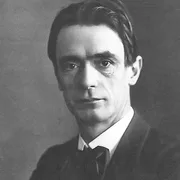 Rudolf Steiner
What consciousness is
Consciousness is identified as (i) the overlapping in the present of current flows of emotions (from the future) and visualizations (from the past), and (ii) the meeting of the astral and etheric bodies.
Mind and body
Interactionist Dualism. The mind (consciousness, Ego/I, astral body) and the body (physical, etheric bodies) are distinct entities, interacting through mechanisms like the 'meeting' or 'overlapping' of these nonphysical and physical members.
Mechanism
The 'meeting' or 'overlapping' of the nonphysical etheric body and the astral body in the present moment is the mechanism for consciousness.
Core claims
- Consciousness is the overlapping in the present of emotions (future flow) and visualizations (past flow).
- The human being is composed of seven distinct members, including the physical, etheric, and astral bodies.
- Consciousness and spiritual progress are developed through higher faculties like Imagination, Inspiration, and Intuition.
Criticisms
The theory is largely dismissed by the scientific and philosophical communities for relying on complex non-physical bodies and esoteric concepts that are beyond the ambit of current science and often not subject to the scientific method of experimentation and replicability.
Implications
- AI consciousness: No
- Consciousness requires specific nonphysical components (etheric and astral bodies, plus the Ego/I) which cannot be generated or instantiated in purely computational or artificial substrates, making AI consciousness in the human sense impossible.
- Survival beyond death: Yes
- The theory explicitly describes post-mortem existence, where the etheric body detaches and disperses, while the individual progresses through planetary spheres in preparation for future incarnations, thus ensuring the continuity of individual existence (Ego/I) beyond biological death.
- Meaning and purpose: Cosmic/Ultimate
- The core purpose is the evolution of consciousness, leading to the conscious and free development of spiritual capacities, cooperation with spiritual beings, and progress across multiple incarnations.
- Virtual immortality: No
- Since consciousness is tied to the intrinsic existence of irreducible non-physical bodies/members, simulating or uploading physical brain states would omit the essential non-physical components necessary for the person's mental self, rendering virtual duplication insufficient.
Related theories
- Theosophy's Eclectic Soul and Consciousness (Competitor/Influence)
- Dualism (Overlap)
- Anomalous (Compatible)
- Idealism (Compatible)
Sources
- The Evolution of Consciousness, Rudolph Steiner (1923)
- During Sleep and after Death (The Evolution of Consciousness), Rudolph Steiner (1923)
- The Wisdom of the Soul, Consciousness and the Soul Life, Rudolph Steiner (1909)
Explore all theories on the Consciousness Atlas · Compare Steiner’s Esoteric Soul and Consciousness with other theories · Which theory of consciousness fits you?