
Theosophy Theory (Theosophy’s Eclectic Soul and Consciousness)
Dualism › Realms of the Soul
‘Consciousness as Fundamental, Multi-Level Cosmic Wisdom’
Theosophy, defining itself as "Divine Wisdom," posits that consciousness is a fundamental, non-emergent property ubiquitous throughout the cosmos, existing even in inorganic matter. Human existence is described by seven principles, including three types of nonphysical soul (animal, human, and spiritual), making it an occult system that views consciousness as evolving across various levels or planes of manifestation.
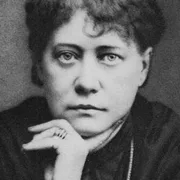 Madame Blavatsky
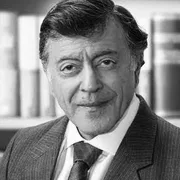 Edi Bilimoria
What consciousness is
Consciousness is identified as absolute Consciousness, an unrealizable but self-existing reality beyond limitation, which is fundamental to the cosmos.
Mind and body
Mind/soul and body are related through composite principles; the spiritual soul is a nonphysical emanation of the Universal mind, intertwined with, but distinct from, the physical body and lower soul aspects.
Mechanism
The unfolding of Consciousness from its Unmanifest and Implicate realms, through the Cosmos, and Man, operating via a multi-level structure of subtle (non-physical) bodies or principles.
Core claims
- Consciousness is fundamental, not emergent, and is present in all matter, including atoms.
- Human beings are composed of three distinct soul aspects (animal, human, spiritual) within seven total principles.
- Consciousness unfolds from Unmanifest realms through the Cosmos to Man.
Criticisms
Categorized as an 'occult sect' and relies on metaphysical concepts, like the existence of multiple non-physical soul components and cosmic consciousness, which are largely dismissed by mainstream scientific and philosophical communities. The classification under Dualisms highlights the challenge of interaction between the physical and non-physical components of the soul.
Implications
- AI consciousness: Conditional
- Since consciousness is ubiquitous (present even in inorganic matter/atoms), AI structures might possess 'atomic consciousness.' However, achieving the complex human level of 'self-consciousness' tied to the non-physical spiritual soul and subtle bodies is highly improbable for purely artificial systems unless technology can instantiate these non-physical components.
- Survival beyond death: Yes
- As a Dualist theory featuring an independent, non-physical soul structure (spiritual soul) and supporting the existence of 'Realms of the Soul,' it provides a clear mechanism for the survival and continued development of the individual consciousness after bodily death.
- Meaning and purpose: Cosmic/Ultimate
- Theosophy is fundamentally a 'Divine Wisdom' religion focused on the 'unfolding of Consciousness' from the Unmanifest, implying a cosmic teleology toward spiritual attainment and ultimate realization.
- Virtual immortality: No
- The essence of human consciousness resides in non-physical components (the spiritual soul and subtle bodies) which cannot be duplicated or uploaded via digital or computational methods derived from replicating the physical brain.
Related theories
- Steiner's Esoteric Soul and Consciousness (Related/Competing)
- Indian Cosmic Consciousness (Influence)
- Dualism (Overlap)
- Panpsychism (Overlap)
Sources
- Soul (2023)
- Theosophy (2023)
- Consciousness (2023)
- Consciousness, Absolute
- Unfolding Consciousness: exploring the living universe and intelligent powers in nature and humans, Edi Bilimoria (2022)
Explore all theories on the Consciousness Atlas · Compare Theosophy Theory (Theosophy’s Eclectic Soul and Consciousness) with other theories · Which theory of consciousness fits you?