
Chalmers’s Panpsychism
Panpsychism
Consciousness as the Intrinsic Nature of Physics
David Chalmers argues that consciousness may be a fundamental feature of physical reality, carried by the intrinsic properties of its most basic entities. He treats panpsychism, and its cousin panprotopsychism, as a synthesis of materialism and dualism, and holds that it would become the most promising answer to the mind-body problem if someone solves the combination problem.
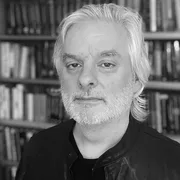 David Chalmers
What consciousness is
Chalmers identifies consciousness with the intrinsic properties of fundamental physical entities, the categorical bases of the dispositions that physics describes. Physics tells us what basic entities do; on this view, phenomenal or protophenomenal properties are what they are.
Mind and body
Mind and matter are two sides of one fundamental stuff that has both physical and phenomenal properties. Chalmers places this ‘monism’ in the sixth of his six classes of views, the nonreductive ones that expand or reconceive physical ontology.
Mechanism
Chalmers reasons dialectically. Materialism (thesis) meets dualism (antithesis) and yields panpsychism; panprotopsychism challenges it and yields Russellian monism; the combination problem then challenges Russellian monism, with no settled resolution yet.
Core claims
- To place consciousness in nature we must either revise our conception of consciousness or revise our conception of nature, and Chalmers declines to deflate consciousness.
- Physics describes only the dispositions of basic entities, so their intrinsic, categorical nature is open to being phenomenal or protophenomenal.
- Chalmers frames panpsychism as a synthesis of materialism and dualism and finds good reason to take both panpsychism and panprotopsychism very seriously.
- A reasonable solution to the combination problem would make either view the most promising solution to the mind-body problem.
Criticisms
The combination problem is the central difficulty, and Chalmers concedes it is unsolved. He also calls panpsychism initially counterintuitive, holding that the sense of oddity fades on reflection.
Implications
- AI consciousness: Conditional
- Since every physical system has phenomenal or protophenomenal properties at its base, an AI is built from the same ingredients as a brain. Whether it forms a unified conscious subject depends on how the unsolved combination problem is answered.
- Survival beyond death: Uncertain
- The fundamental properties outlast any body, but nothing in the view says whether the particular combined subject survives once the brain's structure breaks down.
- Meaning and purpose: Uncertain
- Placing experience in the basic fabric of nature gives it a cosmic footing, but Chalmers draws no conclusions about meaning or purpose.
- Virtual immortality: Uncertain
- An upload would be made of the same fundamental properties, but whether it reconstitutes the same subject turns on the unsolved combination problem.
Related theories
- Russellian Monism (Overlap)
- Panprotopsychism (Overlap)
- Chalmers’s Naturalistic Dualism (Foundation)
- Dennett’s Illusionism (Contrast)
Sources
- Chalmers’s Panpsychism, David Chalmers (Landscape of Consciousness entry)
Explore all theories on the Consciousness Atlas · Compare Chalmers’s Panpsychism with other theories · Which theory of consciousness fits you?