
Popper and Eccles's Interactionist Dualism: Three Worlds and the Liaison Brain
Dualism
Consciousness as a Non-Physical Mind Acting on the Brain
Popper and Eccles argue that conscious experience is a real, non-physical domain that both receives input from the brain and acts on it, so the physical world is not causally closed. Popper places experience in a three-world ontology and argues that consciousness could only have evolved if it affects behavior. Eccles adds a neural interface: a self-conscious mind that scans, selects, and unifies activity in cortical ‘liaison areas’, later recast as psychons acting on dendrons through quantum effects at the synapse.
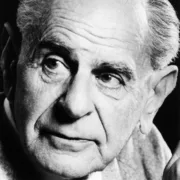 Karl Popper
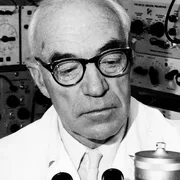 John Eccles
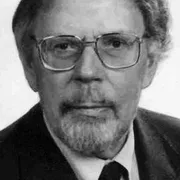 Friedrich Beck
What consciousness is
Consciousness is World 2: an irreducible domain of subjective experience and mental dispositions, distinct from physical World 1 and from World 3, the objective contents of thought.
Mind and body
Mind and brain interact causally in both directions. Eccles locates the interface in open modules of the dominant, language-bearing hemisphere, where the self-conscious mind reads out and modifies neural activity.
Mechanism
A self-conscious mind that selects, interprets, and binds the output of cortical modules. Eccles and Beck propose that mental intention raises the quantum probability of vesicle release at synapses without transferring energy.
Core claims
- A property with no behavioral effect cannot be selected for, so consciousness must be causally effective.
- Subjective experience mediates between the physical world and the objective products of thought.
- The unity of experience outruns any demonstrated neural integration, so the mind supplies it.
- Split-brain findings led Eccles to tie the self-conscious mind to the dominant hemisphere alone.
- Mental intention could alter exocytosis probabilities at synapses without violating energy conservation.
Criticisms
Dennett objects that the theory hands the hardest integrative work to the self-conscious mind without saying how it does it. Rosenkranz argues that the quantum mechanism either introduces causation without a governing law or leaves the probability-altering agent unexplained. Reviewers such as Marriott noted that the two halves of The Self and Its Brain are never fully reconciled, and the book barely engages computational theories of mind.
Implications
- AI consciousness: Unlikely
- Since consciousness is a non-physical World 2 domain that interacts with brains, building a physical machine would not on its own produce it.
- Survival beyond death: Possible
- Eccles held a personal survival thesis grounded in a non-physical self, while Popper did not share it.
- Meaning and purpose: Uncertain
- Popper grounds the self in language and culture, while Eccles sought to integrate science with questions of spirit, so the two diverge.
- Virtual immortality: Unlikely
- Copying the brain would copy World 1 only, not the non-physical mind that unifies and directs it.
Related theories
- Beck-Eccles's Quantum Processes in the Synapse (Extension)
- Sperry’s Mentalist Paradigm (Overlap)
- Ellis's Strong Emergence and Top-Down Causation (Compatible)
- Pitts’s Interactionist Dualism: Energy Conservation and Mental Causation (Extension)
Sources
- The Self and Its Brain: An Argument for Interactionism, Karl Popper and John Eccles (1977)
- Objective Knowledge: An Evolutionary Approach, Karl Popper (1972)
- Natural Selection and the Emergence of Mind, Karl Popper (1978)
- A Unitary Hypothesis of Mind–Brain Interaction in the Cerebral Cortex, John Eccles (1990)
- Quantum Aspects of Brain Activity and the Role of Consciousness, Friedrich Beck and John Eccles (1992)
- How the Self Controls Its Brain, John Eccles (1994)
- The Human Mystery, John Eccles (1979)
Explore all theories on the Consciousness Atlas · Compare Popper and Eccles's Interactionist Dualism: Three Worlds and the Liaison Brain with other theories · Which theory of consciousness fits you?