
Libet's Mind Time: Readiness Potential, Unconscious Initiation, Delayed Awareness, Antedating Consciousness
Materialism › Neurobiological
Consciousness as Delayed, Back-Referred Experience
Benjamin Libet compared the timing of brain activity with the timing of experience and concluded that neural activity must build for up to about half a second before a sensation becomes conscious, with the brain referring the felt timing back to the stimulus. Applied to action, his readiness-potential experiments suggested that voluntary acts start unconsciously, leaving conscious will a power to veto. His results became a standard exhibit for physicalism, yet Libet himself held that phenomenal experience is nonphysical.
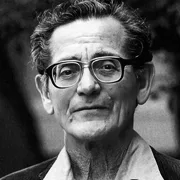 Benjamin Libet
What consciousness is
Phenomenal experience is a real but slow-forming state: it requires a minimum duration of appropriate neural activation, ‘neuronal adequacy’, and its apparent immediacy is constructed after the fact.
Mind and body
Libet held that subjective experience is nonphysical and that mind and brain are independent variables in causal interaction, a view he developed as the Conscious Mental Field. His timing data are widely read as supporting physicalism, a reading he rejected.
Mechanism
The ‘time-on’ factor: the duration of appropriate neural activation, trading off with intensity, decides whether processing becomes conscious, and the experience is then antedated to the early cortical response.
Core claims
- Liminal cortical stimulation needed pulse trains of up to about 500 ms to produce a reported sensation.
- Skin stimuli were antedated relative to cortical stimuli, which lack a primary evoked response, as subjective referral predicts.
- With thalamic stimulation, subjects detected stimuli above chance at durations they reported not feeling.
- The readiness potential began roughly 550 ms before unplanned movements, while awareness of the urge came about 200 ms before.
Criticisms
Schurger, Sitt and Dehaene model the readiness potential as an averaging artifact of a stochastic accumulator, so its ‘onset’ marks no real event and the timing comparison with awareness collapses. Dennett rejects antedating as presupposing an inner theater, and Gomes and Pockett read the sensory data as compatible with much shorter latencies. Critics also note that the veto may itself have unconscious causes and that clock reports of awareness are unreliable.
Implications
- AI consciousness: Uncertain
- Libet ties experience to a field generated by brain activity and does not say whether non-biological systems could generate one.
- Survival beyond death: Unlikely
- Although Libet held experience to be nonphysical, he took it to be generated by brain activity, so nothing in the view suggests it outlasts the brain.
- Meaning and purpose: Humanistic only
- Libet defended free will and moral responsibility through the conscious veto, without claiming any cosmic purpose.
- Virtual immortality: Uncertain
- The view does not address whether a simulated brain would generate a conscious field.
Related theories
- Libet's Conscious Mental Field (Extension)
- Dennett's Multiple Drafts Model (Critique)
- Halligan and Oakley’s Species-Enhancing Epiphenomenalism (Contrast)
- Sapolsky's Hard Incompatibilism (Contrast)
Sources
- Mind Time: The Temporal Factor in Consciousness, Benjamin Libet (2004)
- Time of conscious intention to act in relation to onset of cerebral activity (readiness-potential), B. Libet, C. A. Gleason, E. W. Wright and D. K. Pearl (1983)
- Subjective referral of the timing for a conscious sensory experience, B. Libet, E. W. Wright, B. Feinstein and D. K. Pearl (1979)
- Control of the transition from sensory detection to sensory awareness in man by the duration of a thalamic stimulus, B. Libet et al. (1991)
- Unconscious cerebral initiative and the role of conscious will in voluntary action, Benjamin Libet (1985)
- A testable field theory of mind-brain interaction, Benjamin Libet (1994)
- An accumulator model for spontaneous neural activity prior to self-initiated movement, A. Schurger, J. D. Sitt and S. Dehaene (2012)
- What is the readiness potential?, A. Schurger, P. B. Hu, J. Pak and A. L. Roskies (2021)
Explore all theories on the Consciousness Atlas · Compare Libet's Mind Time: Readiness Potential, Unconscious Initiation, Delayed Awareness, Antedating Consciousness with other theories · Which theory of consciousness fits you?