
Azarian’s Self-Modeling Strange Loop Theory
Non-Reductive
Consciousness as a World Model That Models Its Modeler
Azarian argues that consciousness arises when a predictive world model, built by an organism to resist entropy, recursively models itself as the agent doing the modeling, creating a subject. Each quale is a position in a relational space of possible states, and its valence is its distance from the equilibrium the organism must maintain. He calls the result multilevel monism with strong emergence.
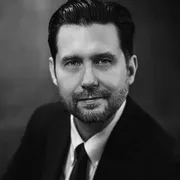 Bobby Azarian
What consciousness is
Consciousness is what it is like to be a recursively self-modeling control architecture: an integrated world model that contains the modeler as an embodied center of perception and action.
Mind and body
Azarian describes an emergent identity: when the self-modeling architecture comes into existence, phenomenal subjectivity comes into existence with it. Experience depends on lower-level physical processes but is neither an illusion, an epiphenomenon, nor a mere redescription of them.
Mechanism
A level-crossing, self-referential loop in which the generative model models itself modeling the world. Integration and differentiation of information are necessary for experience but not sufficient without this loop.
Core claims
- Consciousness is absent in the largely feed-forward cerebellum and lost when thalamocortical and frontoparietal recurrence is disrupted, consistent with a requirement for recurrent architecture.
- Zombies are impossible because any physical duplicate would perform the same integrated, recurrent self-modeling.
- An undetectable inverted spectrum is impossible because human color space is asymmetric.
- Large language models on conventional hardware can simulate self-modeling without being a physical strange loop, so they are not conscious.
Criticisms
Identity and strong emergence are asserted together, and explanatory autonomy with top-down control does not by itself show new causal powers. Recurrence, self-representation, and reflective self-awareness are different properties, and the theory must say which kind of self-modeling is needed where experience seems possible without explicit reflection. Multiple realizability sits uneasily beside strict substrate requirements.
Implications
- AI consciousness: Conditional
- Consciousness is multiply realizable in principle, but it needs a physically recurrent substrate such as neuromorphic or self-organizing hardware or cultured neural tissue, not software running on conventional chips.
- Survival beyond death: No
- Since the subject is generated by a physically embodied self-modeling architecture, it ends when that architecture stops.
- Meaning and purpose: Cosmic/Ultimate
- Azarian places life and mind within a universe that organizes itself toward greater complexity, and frames consciousness as part of that cosmic process.
- Virtual immortality: Conditional
- A simulation on conventional hardware would not be conscious; any continuation would require rebuilding the strange loop in a recurrent physical substrate.
Related theories
- Hofstadter’s Strange Loops (Extension)
- Safron’s Integrated World Modeling Theory (Overlap)
- Friston's Free-Energy Principle and Active Inference (Foundation)
- Ellis's Strong Emergence and Top-Down Causation (Compatible)
Sources
- Our Cosmic Purpose: A Practical Guide to Waking Up the Universe, Bobby Azarian (2027)
- The Romance of Reality: How the Universe Organizes Itself to Create Life, Consciousness, and Cosmic Complexity, Bobby Azarian (2022)
- I Am a Strange Loop, Douglas R. Hofstadter (2007)
- The free-energy principle: A unified brain theory?, Karl Friston (2010)
- An Integrated World Modeling Theory (IWMT) of consciousness, Adam Safron (2020)
Explore all theories on the Consciousness Atlas · Compare Azarian’s Self-Modeling Strange Loop Theory with other theories · Which theory of consciousness fits you?