
Heidegger’s Dasein (Being-In-The-World) Without Qualia
Phenomenology
Consciousness Derived From Being-in-the-World
Martin Heidegger refuses to treat consciousness as an inner subject inspecting mental contents. He starts instead from Dasein, the being we ourselves are, already absorbed in a world of tools, others, moods, and tasks, and treats what we now call phenomenal consciousness as a later abstraction from this practical, affective, temporal disclosure of things as meaningful.
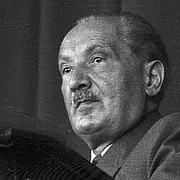 Martin Heidegger
What consciousness is
Heidegger replaces consciousness with Dasein’s disclosedness: the openness in which beings show up as usable, threatening, boring, or urgent. Perception, pain, and mood are ways a world is disclosed rather than inner qualitative states.
Mind and body
Heidegger calls the split between the psychical and the somatic ontologically untenable. In the Zollikon Seminars he grants the brain’s reality but separates the lived body (‘bodying-forth’) from the body as a corporeal thing and motive from cause, denying that causal description of the brain reaches Dasein’s being.
Mechanism
Disclosedness: Dasein is the clearing where beings show up as meaningful, so the question becomes how there is intelligibility, not why there is experience.
Core claims
- Skilled practical coping is primary, and detached contemplation of objects is a derivative mode reached by stripping away everyday significance.
- Moods disclose how one finds oneself in a world and sit prior to any split between subjective and objective.
- Anxiety, as a breakdown of everyday engagement, reveals that ordinary functioning rests on a felt sense of how things matter.
- The hard problem is an artifact of the Cartesian inner/outer split, which being-in-the-world denies a starting point.
Criticisms
Critics say Heidegger evades the hard problem rather than dissolving it, since changing the subject leaves untouched the fact that there is something it is like to be Dasein. Zahavi argues phenomenology can address the hard problem through pre-reflective self-awareness, the Husserlian ground Heidegger subordinated. Michael Wheeler and Dreyfus disagree over whether embodied cognitive science, which keeps action-oriented representation, is truly Heideggerian.
Implications
- AI consciousness: Unlikely
- Dreyfus used Heidegger to argue that symbolic AI fails because it treats our relation to the world as representational. An artificial Dasein would need embodied, caring involvement in a world, which Heidegger’s view gives no reason to expect from computation.
- Meaning and purpose: Humanistic only
- Meaning arises from finite Dasein’s involvement in a world of significance and its relation to its own mortality, with no cosmic teleology implied.
- Virtual immortality: Unlikely
- Since Dasein is defined by finite, embodied, temporal existence in a world, a copied pattern of brain activity would not carry its being.
Related theories
- Husserl’s Transcendental Phenomenology (Critique)
- Enactivism (Influence)
- A. Clark's Extended Mind (Contrast)
- Zahavi’s Pre-Reflective For-Me-Ness (Contrast)
Sources
- Being and Time, Martin Heidegger (1927)
- Zollikon Seminars: Protocols, Conversations, Letters, Martin Heidegger (ed. M. Boss) (2001)
- Being-in-the-World: A Commentary on Heidegger's Being and Time, Division I, H. L. Dreyfus (1991)
- What Computers Still Can't Do: A Critique of Artificial Reason, H. L. Dreyfus (1992)
- Why Heideggerian AI Failed and How Fixing It Would Require Making It More Heideggerian, H. L. Dreyfus (2007)
- Making Sense of Heidegger: A Paradigm Shift, T. Sheehan (2015)
- Heidegger's Analytic: Interpretation, Discourse, and Authenticity in Being and Time, T. Carman (2003)
- Reconstructing the Cognitive World: The Next Step, M. Wheeler (2005)
- Intentionality and Phenomenality: A Phenomenological Take on the Hard Problem, D. Zahavi (2003)
- Heidegger’s Dasein (Being-In-The-World) Without Qualia, Landscape of Consciousness, Robert Lawrence Kuhn
Explore all theories on the Consciousness Atlas · Compare Heidegger’s Dasein (Being-In-The-World) Without Qualia with other theories · Which theory of consciousness fits you?