
Wigner–von Neumann’s Consciousness-Collapse: Experience at the Quantum Cut
Quantum
Consciousness as What Ends the Quantum Measurement Chain
The theory holds that linear quantum dynamics never yields a single definite outcome on its own, and that the chain of interactions from measured system through apparatus and brain ends only when a conscious observer has an experience. Von Neumann built the formal setup and showed the cut between system and observer can be moved freely; Wigner drew the explicit conclusion that consciousness causes collapse, because experience is always definite and never superposed. Wigner later abandoned the view, but it has been revived in mathematically precise form.
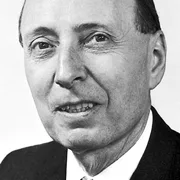 Eugene Wigner
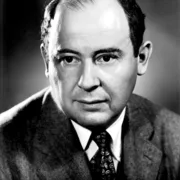 John von Neumann
 Fritz London
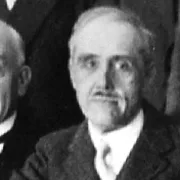 Edmond Bauer
What consciousness is
Wigner defines consciousness phenomenally, as ‘the property of having sensations’, and makes the entry of an impression into consciousness the point where a quantum superposition becomes one definite outcome.
Mind and body
Physical states act on consciousness in perception, and by Wigner's principle of reciprocal action consciousness must act back on the physical world, which it does at measurement. Von Neumann himself invoked psycho-physical parallelism and ascribed no causal power to the observer's ‘abstract ego’.
Mechanism
Consciousness ends unitary evolution: when an impression enters consciousness, a coherent superposition becomes a statistical mixture of definite alternatives. Wigner suggested the linear equations of quantum mechanics may fail for conscious systems.
Core claims
- Von Neumann proved that where the cut between system and observer is placed does not change the theory's predictions, but it must be placed somewhere for any definite outcome to appear.
- London and Bauer (1939) first published the explicit claim, locating the resolution in the observer's faculty of introspection.
- Wigner's Friend shows a conflict between a superposed description of a conscious observer and that observer's report of a definite experience.
- Physics recognizes no one-way influences, so if the world acts on consciousness, consciousness must act on the world.
Criticisms
Decoherence (Zeh, Zurek) shows how environmental entanglement suppresses interference long before a nervous system is reached, which makes consciousness look redundant. Bell asked whether the world's wave function waited billions of years for a single-celled creature, or for someone with a PhD. Applied consistently, the reasoning threatens solipsism, and Bohmian, Everettian, and objective-collapse interpretations handle measurement without consciousness.
Implications
- AI consciousness: Uncertain
- The theory offers no principled criterion for which physical systems are conscious, so it cannot say whether a machine would be.
- Survival beyond death: Unlikely
- Wigner held that physicochemical organization gives rise to consciousness and shapes its contents, so the view offers no basis for experience without a body.
Related theories
- Chalmers and McQueen’s Quantum Collapse (Extension)
- Stapp's Collapsing the Wave Function via Asking "Questions" (Extension)
- Penrose-Hameroff's Orchestrated Objective Reduction (Influence)
- Interactive Dualism (Overlap)
Sources
- Mathematical Foundations of Quantum Mechanics, John von Neumann (1932)
- Remarks on the mind-body question, Eugene P. Wigner (1961)
- The problem of measurement, Eugene P. Wigner (1963)
- La théorie de l'observation en mécanique quantique, Fritz London and Edmond Bauer (1939)
- Consciousness and the collapse of the wave function, David J. Chalmers and Kelvin J. McQueen (2022)
Explore all theories on the Consciousness Atlas · Compare Wigner–von Neumann’s Consciousness-Collapse: Experience at the Quantum Cut with other theories · Which theory of consciousness fits you?