
Advaita Vedanta Idealism (Indian Cosmic Consciousness)
Idealism › Indian Cosmic Consciousness
Consciousness as Ultimate Nondual Reality
This theory posits that consciousness is the singular, nondual fundamental reality (Brahman) that constitutes all existence. Individual human consciousness is ultimately non-different from this pervasive Cosmic Consciousness, which generates first-person inner experiences (qualia). The physical world, including the body-mind complex, is considered derivative or illusionary.
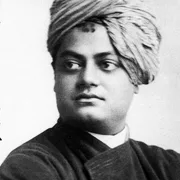 Swami Vivekananda
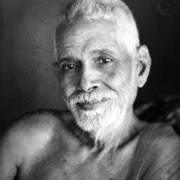 Bhagavan Sri Ramana Maharshi
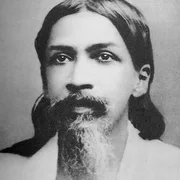 Sri Aurobindo
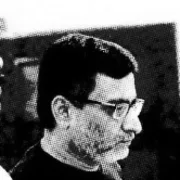 Ganapathy Subramaniam
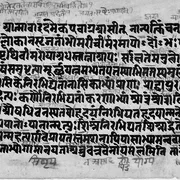 The Upanishads
What consciousness is
Consciousness (Brahman/Cit) is the one nondual reality. Individual consciousness is identified as the all-pervading Cosmic Consciousness expressing itself through the body-mind complex.
Mind and body
The mind and physical world are derivative or illusionary manifestations of the fundamental consciousness. The consciousness shines through the body-mind complex, but is not the body or mind itself.
Mechanism
Non-duality, where the infinite, ultimate consciousness limits or expresses itself in manifold, seemingly diverse forms to create individual subjects of experience.
Core claims
- Brahman is all, and the Self is Brahman: Consciousness is the one nondual reality.
- The hard problem is dissolved because consciousness, being the origin, explains everything by itself.
- Individual conscious identity arises from the one divine consciousness playfully limiting itself.
Criticisms
Criticized for being anti-physicalist and relying on religious tradition. It faces the challenge of explaining how the physical world emerges or is derived from fundamental consciousness, an odd idea alien to common life experiences. It is contrasted with other Indian schools like GV Vedanta, which has differences regarding the ontological reality of matter and individual selves.
Implications
- AI consciousness: Conditional
- If consciousness is fundamental and pervasive throughout reality, then artificial systems could potentially instantiate or participate in cosmic consciousness, provided they meet the structural/complexity requirements for manifestation, though some idealists reject conscious AI based on current computer models.
- Survival beyond death: Yes
- Survival is a fundamental doctrine in Indian traditions (e.g., reincarnation). However, survival often means the eventual loss of current first-person awareness as consciousness is re-absorbed into the ultimate Cosmic Consciousness.
- Meaning and purpose: Cosmic/Ultimate
- By positing consciousness as the ground of all being and ultimate reality, the theory inherently provides cosmic meaning and purpose. Evolutionary Idealist views also see the evolution of consciousness as a primary feature of world meaning.
- Virtual immortality: Not needed
- If consciousness is already fundamental and eternal (Idealism), traditional concepts of survival or eternal life are already theoretically available, making technological virtual immortality moot.
Related theories
- Kastrup's Analytic Idealism (Overlap/Compatible)
- Panpsychism (Overlap)
- Buddhism's Empty, Illusory Phenomenal Consciousness (Overlap/Contrasting)
- Gomatam's GV Vedanta (Contrasting)
Sources
- Consciousness and self in Advaita Vedanta, Swami Sarvapriyananda (2020)
- The Nature of the Human Person (Part 2), Swami Sarvapriyananda (2023)
- How consciousness becomes the physical universe, Kafatos, Tanzi, Chopra (2011)
- Mind in Life: Biology, Phenomenology, and the Sciences of Mind, Evan Thompson (2002)
Explore all theories on the Consciousness Atlas · Compare Advaita Vedanta Idealism (Indian Cosmic Consciousness) with other theories · Which theory of consciousness fits you?