
Buddhism’s Empty, Illusory Phenomenal Consciousness
Idealism › Empty, Illusory Phenomenal Consciousness
‘Phenomenal Consciousness as Cognitive Illusion and Emptiness’
This theory suggests that the sense of phenomenal consciousness or 'what-it-is-like-ness' is an instance of cognitive illusion, rejecting the existence of a permanent, inner 'self' or 'soul'. It posits that consciousness, like all phenomena, is ultimately empty of intrinsic nature, and is better understood as a network of relational processes.
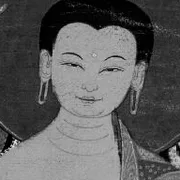 Nāgārjuna
 Jay Garfield
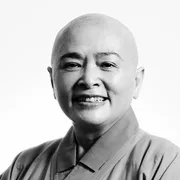 Yifa
What consciousness is
Consciousness (in the phenomenal sense) is identified as a cognitive illusion or conventional reality constituted by a network of processes/relations (Madhyamaka) or as an inner subjective substrate of representations (Yogācāra).
Mind and body
The relationship is understood as interdependent and relational, lacking intrinsic self/substance. The illusion of a centralized mind or self is rejected.
Mechanism
The principle of emptiness (lack of intrinsic nature) applied to all phenomena, resulting in the realization that phenomenal consciousness is a cognitive illusion.
Core claims
- Phenomenal consciousness (what-it-is-like-ness) is rejected as a cognitive illusion.
- Consciousness, like everything else, is empty of intrinsic nature.
- Consciousness is analyzed through nine discrete levels of awareness.
- The 'self' does not exist; belief in it is illusory.
Criticisms
Western philosophers often find the core claim—that phenomenal consciousness is illusory—counter-intuitive and untenable. Internally, tension exists between the idealistic Yogācāra school and the relational Madhyamaka school.
Implications
- AI consciousness: Uncertain
- If consciousness is fundamentally an illusion arising from a network of processes, it is unclear whether advanced computation (AI) can replicate the complex conventional reality or the specific non-self processes that generate this illusion, even though computation is not fundamentally ruled out.
- Survival beyond death: Yes
- The eighth (store-house) consciousness persists after death, carrying karmic energy through cycles of reincarnation. However, survival often entails expansion back into cosmic consciousness, blurring or banishing individual first-person identity ('being sugar').
- Meaning and purpose: Cosmic/Ultimate
- The ultimate goal is spiritual attainment (reaching the ninth consciousness or Buddha nature), which serves as the core source of energy and ultimate fulfillment, moving beyond merely humanistic purpose.
- Virtual immortality: Not needed
- The theory already provides a mechanism for persistence (the eighth consciousness) or transcendence (ninth consciousness), making artificial, digital duplication (virtual immortality) philosophically moot.
Related theories
- Indian Cosmic Consciousness (Overlap/Historical Context)
- Eliminative/Illusionism (Compatible (regarding the rejection of phenomenal reality))
- Metzinger's No-Self Representational Theory of Subjectivity (Compatible (regarding rejection of the self))
- Madhyamaka School (Subcategory)
Sources
- Engaging Buddhism, Jay L. Garfield (2015)
- Illusionism and givenness, Jay Garfield (2016)
- The Nine Consciousness (2022)
- Consciousness from Non-Self in Buddhism, Wenge Huang
Explore all theories on the Consciousness Atlas · Compare Buddhism’s Empty, Illusory Phenomenal Consciousness with other theories · Which theory of consciousness fits you?