
Sprigge’s Absolute Idealism
Idealism
Finite Minds as Perspectives Within One Cosmic Experience
Timothy Sprigge holds that phenomenal consciousness is the only intrinsically concrete reality we know, and that the physical world described by science is an abstract relational structure whose inner nature is experiential. The countless centers of experience making up nature are partial aspects of one all-inclusive cosmic experience, the Absolute, and finite minds are real but incomplete perspectives within it.
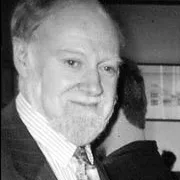 Timothy L. S. Sprigge
What consciousness is
Consciousness, defined by Sprigge as what it is like to be a given subject in a given situation, is the intrinsic nature of reality. What appears outwardly as physical is, in itself, experience in enormously varying forms and degrees.
Mind and body
Physical facts correlate with, express and structurally map consciousness but do not reveal what it is in itself. The hard problem arises only when physical description is mistaken for concrete ontology.
Mechanism
A Russell-Eddington argument: physics gives only relational, causal and mathematical structure, so the best hypothesis is that the intrinsic nature of that structure is experiential, all of it united in the Absolute.
Core claims
- Sprigge defined phenomenal consciousness as what it is like to be a subject in a situation in 1971, about three years before Nagel's better-known version, which Nagel acknowledged.
- Behaviorism and functionalism gain plausibility only by assuming the Humean principle that there are no necessary connections between distinct existences.
- Agnosticism about the intrinsic nature of matter is possible but explains less than idealist panpsychism, so Sprigge's case is an inference to the best explanation.
- Wherever there is sentience there is morally considerable reality, which grounds concern for animals and nature.
Criticisms
The view faces the reverse of the panpsychist combination problem: if the whole is primary, how can finite centers of experience be distinct without becoming independent? Sprigge answers that they are real but incomplete abstractions, phenomenologically separate yet metaphysically partial.
Implications
- Meaning and purpose: Cosmic/Ultimate
- Reality is ultimately experiential, unified and value-laden, and every finite mind is a perspective within one all-inclusive experience.
Related theories
- Bradley’s Absolute Idealism (Foundation)
- Berkeley’s Immaterialist Idealism (Influence)
- Spinoza’s One Reality: Embodied Mind and Graded Consciousness (Influence)
- Russellian Monism (Overlap)
Sources
- Final Causes, T. L. S. Sprigge & A. Montefiore (1971)
- The Vindication of Absolute Idealism, Timothy L. S. Sprigge (1983)
- James and Bradley: American Truth and British Reality, Timothy L. S. Sprigge (1993)
- Consciousness, Timothy L. S. Sprigge (Synthese) (1994)
- The God of Metaphysics, Timothy L. S. Sprigge (2006)
- My Philosophy and Some Defence of It, Timothy L. S. Sprigge (2007)
- The Importance of Subjectivity: Selected Essays in Metaphysics and Ethics, Timothy L. S. Sprigge (L. B. McHenry, Ed.) (2011)
- Consciousness, Reality and Value: Essays in Honour of T. L. S. Sprigge, P. Basile & L. B. McHenry (Eds.) (2007)
- Sprigge's Ontology of Consciousness, L. B. McHenry (2010)
- A Treatise Concerning the Principles of Human Knowledge, George Berkeley (1710)
- Appearance and Reality, F. H. Bradley (1893)
- What Is It Like to Be a Bat?, Thomas Nagel (1974)
Explore all theories on the Consciousness Atlas · Compare Sprigge’s Absolute Idealism with other theories · Which theory of consciousness fits you?