
Koch Compares Integrated Information Theory with Panpsychism Theory
Integrated Info › Comparison/Critique
IIT: A Fundamentally Conscious Theory that Resolves Panpsychism's Combination Problem
This entry outlines Christof Koch's comparison of Integrated Information Theory (IIT) and Panpsychism, arguing that both share the intuition that consciousness is an intrinsic, fundamental property of reality. However, IIT is positioned as superior because it articulates specific criteria (quantified by Phi, $Phi$) for consciousness, resolves the combination problem via the Exclusion Postulate, and offers a concrete empirical research program, unlike traditional Panpsychism.
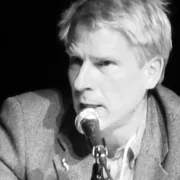 Christof Koch
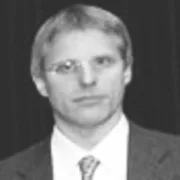 Giulio Tononi
What consciousness is
Consciousness is identified as unfolded intrinsic causal power, which is fundamentally similar to Panpsychism's view of consciousness as intrinsic, but mathematically specified as a maximally irreducible conceptual structure ($Phi$-structure).
Mind and body
Explanatory Identity (Experience is identical to a $Phi$-structure unfolded from the physical substrate). The relationship is intrinsic, requiring no dualism or emergence, but demanding specific physical configuration.
Mechanism
The Exclusion Postulate: This dictate specifies which aggregate of entities (e.g., neurons) exists as a unitary conscious entity by possessing a maximum amount of integrated information ($Phi$). This mechanism resolves Panpsychism’s combination problem.
Core claims
- IIT resolves the combination problem by articulating which systems are conscious (maximum $Phi$) via the exclusion postulate.
- IIT provides a conceptual and potentially empirical research program, unlike traditional Panpsychism.
- Consciousness is structure, not function or computation; digital computers cannot be sentient due to negligible integrated information.
- IIT provides proof-of-principle for how quantitative primary qualities correspond to secondary (phenomenal) qualities.
Criticisms
IIT is criticized for making anti-common sense predictions (imputing consciousness to simple objects) and has been characterized as 'pseudoscience' by a sizable group of researchers. The results of adversarial empirical tests are considered insufficient by critics to justify the core theory.
Implications
- AI consciousness: No
- Koch argues that IIT fundamentally disagrees with the functionalist view necessary for AI consciousness, asserting that digital computers will never be sentient because their hardware structure results in negligible integrated information ($Phi$), regardless of their computational power or intelligence.
- Survival beyond death: Uncertain
- Survival depends on the unknown nature and technology-manipulability of the non-reducible structure of reality (qualia space) posited by IIT. While some form of persistence is not ruled out, first-person survival is an open question.
- Meaning and purpose: Uncertain
- While IIT’s speculative, innumerable nth dimensional structures are novel enough to suspend judgment regarding ultimate meaning, the core measurement and analysis of consciousness conveyed by the theory do not offer ultimate meaning, purpose, or value.
- Virtual immortality: Uncertain
- Mind-uploading is impossible if consciousness is a structure associated with complex system physics (as IIT holds) rather than a mere algorithm. Uploading would result in a 'deep fake' lacking subjective experience unless advanced technology can manipulate the consciousness-causing $Phi$-structure.
Related theories
- Panpsychism (Shared Intuition/Critique)
- Computational (Critique (Non-computable consciousness))
- Galileo’s Error (Philip Goff) (Critique (Koch counters Goff's claim that qualitative aspects cannot be captured by quantitative frameworks.))
- Baars's and Dehaene's Global Workspace Theory (Contrast (Implicit, regarding location and necessity of recurrence/global broadcast))
Sources
- Reflections of a natural scientist on panpsychism, Christof Koch (2021)
- The Feeling of Life Itself: Why Consciousness is Widespread but Can’t be Computed, Christof Koch (2019)
- Then I Am Myself the World: What Consciousness Is and How to Expand It, Christof Koch (2024)
- From the phenomenology to the mechanisms of consciousness: integrated information theory 3.0, Masafumi Oizumi, Larissa Albantakis, Giulio Tononi (2014)
Explore all theories on the Consciousness Atlas · Compare Koch Compares Integrated Information Theory with Panpsychism Theory with other theories · Which theory of consciousness fits you?