The Consciousness Atlas is an interactive web app that visualizes more
than 450 theories of consciousness. It is based on Robert Lawrence
Kuhn's 2024 paper,
"A Landscape of Consciousness". The Atlas maps theories that address phenomenal consciousness - the
subjective feel of experience, such as the redness of red.
What the Atlas is
The Atlas is a visual reference built on Kuhn's taxonomy. It presents
the full set of theories at once so you can explore the field visually
and open any theory to read its entry, like an encyclopedia with
structured entries. Each theory entry shows a concise identity line,
conceptual ground, suggested mechanism, empirical notes, implications,
and sources.
Why this exists
Consciousness is studied across disciplines - neuroscience,
philosophy, and sometimes spiritual or anomalous-state research.
Kuhn's paper collects and organizes hundreds of theories along a
spectrum from most physical to least physical. The Atlas puts that
organization into a visual form so readers, students, and researchers
can quickly see how different positions relate and where each theory
sits on the spectrum.
How it works
Theories are grouped into eleven main categories, arranged from physical to nonphysical: Materialism, Non-Reductive Physicalism, Quantum and Dimensions, Information, Panpsychism, Neutral Monism, Dualism, Idealism, Phenomenology, Anomalous States, and Challenge Theories. The app shows the whole map at once. Click any theory to read its structured entry, which includes references to canonical sources and named thinkers.
Who it is for
- Students learning philosophy of mind and cognitive science
-
Researchers and lecturers looking for an at-a-glance comparative
resource
-
Journalists and writers who need a quick reference to the range of
positions
-
Curious readers who want a clear view of what people mean when they
talk about consciousness
What the Atlas does not do
The Atlas does not endorse or rank theories. It is a visualization and
reference based on Kuhn's taxonomy - collect and present, not judge.
It does not attempt to settle the hard problem of consciousness. It is
a tool for exploration and comparison.
A note from Kuhn
Kuhn explicitly states the project's purpose: "collect and categorize,
not assess and adjudicate." The Consciousness Atlas follows that
approach. The data and structure are derived from Kuhn's paper;
feedback and suggested corrections are welcome, but the app is a
visualization layer on top of Kuhn's work.
Kuhn was not involved in the design or content of the Consciousness
Atlas, other than his original paper, 'A Landscape of Consciousness,'
which is the sole source.
FAQ
What is phenomenal consciousness?
Phenomenal consciousness refers to subjective experience - the
qualitative feel of being aware, like the taste of coffee or the
redness of red.
How many theories does the Atlas include?
The Atlas visualizes more than 450 individual theories, grouped into eleven broad categories.
Does the Atlas show which theory is true?
No. The Atlas presents theories neutrally. It is a map, not an
argument for any single position.
Is the Atlas academic?
The Atlas is based on an academic source - Robert Kuhn's 2024 paper,
"A Landscape of Consciousness" - and links to canonical sources
where available.
Summary
The Consciousness Atlas is a straightforward visualization tool: it
presents Kuhn's taxonomy as a single, explorable map and lets users
open individual theory entries to read structured, referenced
summaries. It is designed to make this complex field easier to survey
and to serve as a practical reference.
Bunge’s Emergent Materialism
Materialism › Neurobiological
Mental States as Emergent CNS Functions
Mario Bunge proposes emergent materialism, a form of psychoneural monism, asserting that the mind is a collection of functions/activities of the complex central nervous system (CNS). Mental states are an emergent subset of brain states characterized by neural plasticity, which possess properties not reducible to fundamental physical laws. He calls for a psychobiological approach grounded in science.
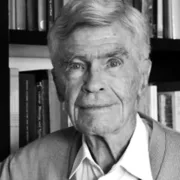 Mario Bunge
What consciousness is
Consciousness (Mind) is identified as a collection of functions (activities, events) of the extremely complex central nervous system, specifically those mental states that exhibit neural plasticity and learning.
Mind and body
Mind states are identical to a distinguished subset of brain states/processes (psychoneural monism). This relationship involves ontological reduction without full epistemological reduction.
Mechanism
The emergent principle operating within the complex, organized structure of the Central Nervous System, resulting in properties (mental states/functions) that are non-reducible to lower-level physical laws.
Core claims
- Mind is a collection of emergent functions/activities of the central nervous system.
- Mental states form a subset of brain states distinguished by neural plasticity and learning.
- The explanation requires a psychobiological approach, synthesizing neuroscience and social science.
Criticisms
The theory is programmatic and requires detailed mathematical and mechanistic development. Bunge criticizes rival materialist theories (like Eliminative and Reductive Materialism) for ignoring the peculiar emergent properties of the CNS.
Implications
- AI consciousness: Likely
- As a materialist monism where consciousness is a specific function of a complex physical system (the CNS), there is no in-principle prohibition against realizing the necessary complex emergent functions in an artificial substrate.
- Survival beyond death: No
- Consciousness is defined as activities/functions of the biological Central Nervous System, explicitly rejecting any 'separate mental entity' or soul necessary for post-mortem survival.
- Meaning and purpose: Humanistic only
- Consistent with Materialism Theories, the theory provides a purely physicalist account of consciousness, suggesting that ultimate cosmic meaning or purpose is unlikely, although human meaning and value are created by conscious agents.
- Virtual immortality: Yes
- Since the first-person mental self is identified with a collection of functions/processes of the CNS, a perfect duplication and simulation (uploading) of these functions into a non-biological medium should, in principle, ensure continuity of consciousness.
Related theories
Sources
- The Mind-Body Problem: A Psychobiological Approach, Mario Bunge (2014)
- Matter and Mind: A Philosophical Inquiry, Mario Bunge (2011)
- Emergence and the mind, Mario Bunge (1977)
Explore all theories on the Consciousness Atlas · Compare Bunge’s Emergent Materialism with other theories · Which theory of consciousness fits you?
