
Searle’s Biological Naturalism
Materialism › Neurobiological
Consciousness as an irreducible biological feature of the brain
Biological Naturalism posits that consciousness is a real, irreducible, subjective biological feature of the brain, entirely caused by lower-level neurobiological processes and realized as higher-level system features. This approach seeks to solve the mind-body problem by accepting the scientific worldview while acknowledging the first-person ontology of conscious experience.
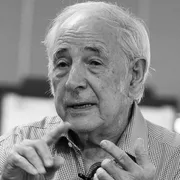 John Searle
What consciousness is
Conscious states are identified as real parts of the real world that are higher-level, system features of the brain, defined as states of awareness, sentience, or feeling that persist during wakefulness.
Mind and body
Conscious states are causally reduced to lower-level brain processes (causal reducibility), but are ontologically irreducible to these processes because consciousness has a subjective (first-person) ontology while its basis has an objective (third-person) ontology.
Mechanism
The principle is that all conscious states are reliably and universally caused by lower-level brain processes and realized as system features, functioning as a real biological machine.
Core claims
- Conscious states are real parts of the real world and cannot be eliminated or reduced to something else (ontological irreducibility).
- All conscious states are caused by lower-level brain processes, established by an overwhelming amount of evidence (causal reducibility).
- Conscious states are realized in the brain as higher-level or system features.
Criticisms
Critics dispute the claim that the causal connection between brain states and consciousness is fully established. Tension exists in maintaining materialism while arguing consciousness is ontologically subjective and irreducible to objective physical processes.
Implications
- AI consciousness: Conditional
- Searle rejects consciousness via simulation (Chinese Room Argument) but argues that if the causally sufficient biological mechanism is known, an artificial machine that implements that same mechanism could be conscious, as consciousness does not strictly require biological neurons, only sufficient causal power.
- Survival beyond death: No
- Consciousness is entirely physical and solely the product of biological brains; therefore, death of the brain and body means irrevocable, permanent non-existence.
- Meaning and purpose: Humanistic only
- As a materialist theory, Biological Naturalism struggles to rationalize ultimate cosmic meaning or purpose, though humanistic meaning created by ourselves remains possible.
- Virtual immortality: Yes
- If consciousness is entirely explainable by physical/biological states, then duplicating those states (and their causal relations) in a non-biological medium would, in principle, allow for the uploading and continuation of the first-person mental self.
Related theories
- Mind-Brain Identity (Overlap/Evolution (A more sophisticated form of materialism based on brain identity))
- Dennett's Multiple Drafts Model (Contrast (Both are biological naturalists, but Dennett prioritizes content/function, while Searle prioritizes consciousness/subjectivity))
- Property Dualism (Critique (Searle rejects this and other traditional theories as irrelevant when starting from a modern scientific worldview))
Sources
- The Rediscovery of Mind (1992)
- Biological naturalism (2007)
- What things are conscious? (2007)
- Consciousness and Language (2002)
Explore all theories on the Consciousness Atlas · Compare Searle’s Biological Naturalism with other theories · Which theory of consciousness fits you?