
Friston’s free-energy principle and active inference
Materialism › Homeostatic
Consciousness as Active Inference and Minimized Surprise
This theory conceptualizes consciousness as a natural process arising from the minimization of 'free energy,' which is the difference between an organism's internal model (perceptual expectations) and real-time sensory inputs. Consciousness, therefore, functions as the evolved mechanism for simulating scenarios of the world and reducing prediction error to ensure survival and maintain homeostasis.
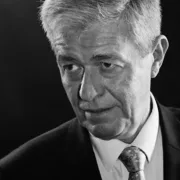 Karl Friston
What consciousness is
Consciousness is identified as a natural process of inference, specifically the internal emergent model that monitors and minimizes the free energy principle (surprise), thereby optimizing the representational capacities of physical/brain systems.
Mind and body
Monistic/Identity. The theory proposes that consciousness is the natural outcome of the physical/brain system's self-organizing processes, dissolving familiar dialectics between mind and matter.
Mechanism
The Free-Energy Principle (FEP), which states that all self-organizing systems must minimize free energy (or 'surprise'), driving action and perception through active inference.
Core claims
- Consciousness is the natural outcome of the free-energy principle for action and perception (active inference).
- Minimizing surprise is critical because a failure to do so threatens the system's existence.
- Consciousness is inference about one's future, relying on an internal model of how sensations are generated.
- The theory's metaphysical stamp is Markovian monism, which aims to dissolve the mind-matter dialectic.
Criticisms
Criticized for being highly deflationary and difficult to reconcile with the first-person reality of phenomenal experience (the Hard Problem), viewing consciousness merely as a mathematical process or 'natural outcome.' Friston finds engaging with the philosophical premise of consciousness as a 'thing' difficult.
Implications
- AI consciousness: Yes
- As a strong materialist theory, if consciousness is fully explained by computational processes of inference and representation minimization, then non-biological systems capable of executing these processes must eventually attain consciousness in principle.
- Survival beyond death: No
- Consciousness is an emergent natural process tied directly to the functional dynamics and physical substrate of the biological brain; thus, it cannot survive bodily decay.
- Meaning and purpose: Humanistic only
- The foundational imperative of the conscious process is survival (minimizing surprise/maintaining homeostasis). The theory does not rationalize ultimate cosmic meaning or purpose, aligning with general materialist perspectives.
- Virtual immortality: Yes
- Since consciousness is understood as an emergent, formalized process of inference optimization, perfect duplication of the brain's information processing and representational dynamics in a non-biological medium should be sufficient for the continuation of the mental self.
Related theories
- Clark's Predictive Processing (Influence)
- Solms's Affect as the Hidden Spring of Consciousness (Extension)
- Carhart-Harris's Entropic Brain Hypothesis (Extension)
- Projective Consciousness Model (Extension)
Sources
- A theory of cortical responses, K. Friston (2005)
- Active interference: a process theory, K. Friston et al (2017)
- The Mathematics of Mind-Time, K. Friston (2017)
- Sentience and the origins of consciousness: from cartesian duality to markovian monism, K. Friston, W. Wiese, J.A. Hobson (2020)
Explore all theories on the Consciousness Atlas · Compare Friston’s free-energy principle and active inference with other theories · Which theory of consciousness fits you?