
Solms's Affect as the Hidden Spring of Consciousness
Materialism › Homeostatic
Affect as the Foundational Form of Consciousness
This theory identifies the elemental form of consciousness as affect (feeling) and locates its physiological mechanism in the upper brainstem, functioning as an extended form of homeostasis. It applies Friston’s free energy principle, arguing that affective experience (pleasure/unpleasure) is the efficient mechanism that complex organisms use to monitor environmental uncertainty and optimize survival behavior.
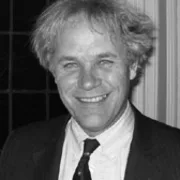 Mark Solms
What consciousness is
Consciousness, in its elementary form of sentient subjectivity, is constituted by affect (feelings), which operationalizes free energy minimization (unexpected uncertainty is felt as unpleasure, while decreases are felt as pleasure).
Mind and body
Dual-aspect; physiological and psychological phenomena are complementary manifestations of a single underlying unitary process (electrical discharge analogy), rather than one causing the other.
Mechanism
The operationalization of the Free Energy Principle (FEP) as affective states (pleasure/unpleasure) in the upper brainstem, which guides the organism’s behavior towards stability.
Core claims
- Affect is the foundational form of consciousness, originating in the upper brainstem.
- The core mechanism reduces to Friston’s free-energy law, making consciousness mathematically tractable.
- Consciousness is part of nature and arises from proactive resistance to entropy.
- Damage to the upper brainstem reliably obliterates consciousness, supporting its foundational role.
Criticisms
The theory must argue convincingly against the traditional view that the brainstem only regulates the *level* of consciousness (waking/comatose) and not its *qualitative content*. Its self-description as dual-aspect monism is philosophically subtle, given its categorization as a Materialism Theory based on physiological mechanisms.
Implications
- AI consciousness: Likely
- If the theory is correct, an artificially conscious self-organizing system can be engineered, provided the system is designed to proactively resist entropy and manage existential needs, generating affective states as feedback.
- Survival beyond death: No
- As a Materialism Theory, consciousness is entirely dependent on the biological brain and its physical processes, implying permanent non-existence upon the death of the organism.
- Meaning and purpose: Humanistic only
- The core of consciousness is rooted in the biological imperative for survival (avoiding oblivion and minimizing free energy), which supports biological and humanistically constructed meaning, but no ultimate cosmic purpose.
- Virtual immortality: Yes
- As a Materialism Theory, the first-person mental self is, in principle, uploadable, provided the complex physical mechanisms (including the affective and homeostatic dynamics) can be comprehensively duplicated in a synthetic substrate.
Related theories
- Friston's Free-Energy Principle and Active Inference (Influence/Extension)
- Damasio's Homeostatic Feelings and Emergence of Consciousness (Compatible)
- Integrated Information Theory (Critique/Contrast)
Sources
- The hard problem of consciousness and the free energy principle (2018)
- The Hidden Spring: A Journey to the Source of Consciousness (2021)
- Précis of the hidden spring: a journey to the source of consciousness (2021)
Explore all theories on the Consciousness Atlas · Compare Solms's Affect as the Hidden Spring of Consciousness with other theories · Which theory of consciousness fits you?