
Godfrey-Smith’s Naturalist, Gradualist, Diversified Evolution of Consciousness
Materialism › Phylogenetic
Consciousness as Gradually Evolved Animal Subjectivity
Godfrey-Smith argues that subjective experience evolved gradually over deep time from the basic animal task of sensing the world and coordinating action. Tracking the effects of one's own movements on one's senses (reafference) gave rise to a self-versus-other point of view, and because separate lineages such as octopuses built minds independently, experience comes in many forms with no single scale.
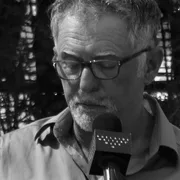 Peter Godfrey-Smith
What consciousness is
Consciousness is an evolved form of subjectivity, the point of view of a body actively managing its relationship with its surroundings. In humans it is a cluster of traits with different evolutionary histories.
Mind and body
Embodied and enactive: mind arises from the dynamic interaction of the whole organism with its environment, not only from the brain. Godfrey-Smith rejects the hardware-software picture of brain and mind and is decidedly against panpsychism.
Mechanism
Reafference, the handling of the effects of action on the actor's own senses, which organizes neural processing around a self-other distinction. Godfrey-Smith stresses that early nervous systems evolved largely to form and coordinate action.
Core claims
- If materialism is true, felt experience must also have arisen gradually, so threshold models with a sharp on/off criterion are wrong.
- Invertebrate evidence shows that sensory and evaluative complexity can come apart, which counts against single-criterion tests for consciousness.
- Octopuses evolved complex nervous systems and intelligence independently of vertebrates, so evolution built minds at least twice.
- Plants, fungi, and bacteria sense, respond, and in some cases remember, which leaves a grey zone where mind is neither wholly present nor wholly absent.
Criticisms
A graded, multidimensional picture without a threshold makes it hard to say whether a given organism has any experience at all. Godfrey-Smith hopes the evolutionary story narrows the explanatory gap, but tracing how subjectivity arose does not by itself show why it feels like anything.
Implications
- AI consciousness: Unlikely
- Since Godfrey-Smith ties experience to living bodies sensing and acting in the world and rejects the software model of mind, a disembodied computer program would lack what consciousness requires.
- Survival beyond death: No
- On this view consciousness is the lived perspective of an active body, so it follows that it ends with the body's life.
- Meaning and purpose: Humanistic only
- Mind is a product of animal evolution, with no cosmic purpose behind it.
- Virtual immortality: Unlikely
- Because the view rejects treating mind as software that could run on other hardware, uploading a mind would not preserve experience.
Related theories
- Integrated Information Theory (Critique)
- Enactivism (Overlap)
- Feinberg and Mallatt's Ancient Origins of Consciousness (Overlap)
- Birch’s Comparative Sentience: Consciousness Profiles Across Diverse Minds (Compatible)
Sources
- Other Minds: The Octopus, The Sea, and the Deep Origins of Consciousness, Peter Godfrey-Smith
- Godfrey-Smith’s Naturalist, Gradualist, Diversified Evolution of Consciousness, Peter Godfrey-Smith (Landscape of Consciousness entry) (2014)
Explore all theories on the Consciousness Atlas · Compare Godfrey-Smith’s Naturalist, Gradualist, Diversified Evolution of Consciousness with other theories · Which theory of consciousness fits you?