
Grossberg’s Adaptive Resonance Theory (ART)
Materialism › Computational
‘Conscious States as Resonant States’
Grossberg’s theory establishes that all conscious states are resonant states arising from the interaction of bottom-up sensory patterns with learned top-down expectations. This theoretical foundation, Adaptive Resonance Theory (ART), explains how the brain self-organizes to consciously attend, categorize, recognize, and predict phenomena in a dynamic world. It claims the varieties of these brain resonances make progress toward solving the hard problem of consciousness.
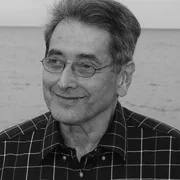 Stephen Grossberg
What consciousness is
Consciousness is identified as a persistent resonant state resulting from the interaction between bottom-up patterns and learned top-down expectations, capable of supporting conscious awareness when it includes feature-selective cells representing qualia. The mind is conceptualized as an activity, or a verb, not a static entity.
Mind and body
Identity/Monistic. Mind is the activity (a verb, not a noun) of the physical brain, regulated by mechanistically similar laws conserved across cellular systems.
Mechanism
Adaptive Resonance Theory (ART), where a persistent, maximally irreducible resonant state between bottom-up and top-down pathways is claimed to be the necessary and sufficient condition for consciousness (all conscious states are resonant states).
Criticisms
No specific major external criticisms are detailed in the sources, but general tensions common to materialist theories (e.g., the difficulty of fully capturing subjective quality/qualia through purely functional definitions) apply.
Implications
- AI consciousness: Likely
- The theory is a functionalist model where consciousness is the result of specific computational structures and conserved laws being realized. If these computational structures (resonant states) can be implemented in non-biological hardware, AI consciousness is possible.
- Survival beyond death: No
- Consciousness is fundamentally tied to the physically instantiated resonant activity of the biological brain, offering no conceptual pathway for persistence after bodily death.
- Meaning and purpose: Humanistic only
- As a Materialist theory focused on the self-organization and adaptive function of the brain (learning, prediction, survival), it does not imply any ultimate or cosmic meaning or purpose outside of human experience.
- Virtual immortality: Likely
- If the mind is functionally defined as a system of computational activities (resonant states), then a sufficiently complete reproduction of this structure in a non-biological medium should, in principle, preserve the first-person mental self.
Related theories
- Bach's Cortical Conductor Theory (Similarity (Functionalist Approach))
- Dennett's Multiple Drafts Model (Similarity (Functionalist Approach))
- Graziano's Attention Schema Theory (Similarity (Functionalist Approach))
Sources
- Adaptive Resonance Theory: how a brain learns to consciously attend, learn, and recognize a changing world, Stephen Grossberg (2013)
- The resonant brain: how attentive conscious seeing regulates action sequences that interact with attentive cognitive learning, recognition, and prediction, Stephen Grossberg (2019)
- Conscious Mind, Resonant Brain: How Each Brain Makes a Mind, Stephen Grossberg (2021)
- Towards solving the hard problem of consciousness: the varieties of brain resonances and the conscious experiences that they support, Stephen Grossberg (2017)
Explore all theories on the Consciousness Atlas · Compare Grossberg’s Adaptive Resonance Theory (ART) with other theories · Which theory of consciousness fits you?