
Wang’s Layered Architecture and Cognitive Informatics
Materialism › Computational
Consciousness as the Top Layer of a Formal Brain Architecture
Wang treats consciousness as the highest collective state in a layered functional architecture of the brain, built up from metabolic homeostasis, unconscious processing, and subconscious processing. Consciousness registers real-time information about the body’s and emotions’ condition in a proposed cerebellar ‘Conscious Status Memory,’ and the thalamus processes it dynamically. Wang writes this process in his own denotational mathematics so that cognitive computers and robots can implement it.
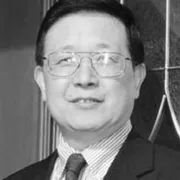 Yingxu Wang
What consciousness is
Consciousness is a collective state of self-awareness, environmental awareness, and intentional responsiveness, generated from the layers beneath it. Wang also calls it the sense of self and the sign of life in natural intelligence.
Mind and body
Mental processes are functions of physiological structures, organized in a reference model that maps cognitive functions onto neural mechanisms.
Mechanism
A conscious state is a function that maps current events (external stimuli and internal motivations) together with the contents of Conscious Status Memory onto an updated state of that memory.
Core claims
- The brain’s mental processes form a layered hierarchy from inherited, automatic functions to acquired, plastic, goal-controlled ones.
- Homeostasis is not consciousness but supplies the physiological stability consciousness requires.
- The cerebellum functions as Conscious Status Memory, a memory type alongside short-term, long-term, sensory-buffer, and action-buffer memory.
- Concept algebra, real-time process algebra, and system algebra can specify consciousness precisely enough for machine implementation.
Criticisms
Placing Conscious Status Memory in the cerebellum conflicts with clinical evidence that people with cerebellar agenesis or cerebellectomy remain broadly conscious. The formal apparatus is developed mostly within Wang’s own program and journals, with limited engagement with the wider consciousness literature.
Implications
- AI consciousness: Likely
- Wang formalizes consciousness explicitly so that cognitive computers and robots can implement it, which presumes machine consciousness is achievable.
- Survival beyond death: No
- Since consciousness is generated from physiological structures and depends on homeostasis, it follows from the view that it ends with the body.
- Virtual immortality: Uncertain
- The model allows consciousness in machines, but Wang does not discuss transferring a particular individual’s consciousness.
Related theories
- Computational Theories (Overlap)
- Minsky's Society of Mind (Compatible)
- Ward's Thalamic Dynamic Core and Min's Thalamic Reticular Gate (Overlap)
- Damasio's Homeostatic Feelings and Emergence of Consciousness (Compatible)
Sources
- On Cognitive Informatics, Yingxu Wang (2003)
- A Layered Reference Model of the Brain (LRMB), Y. Wang, Y. Wang, S. Patel, and D. Patel (2006)
- Cognitive Informatics Models of the Brain, Y. Wang and Y. Wang (2006)
- The OAR Model of Neural Informatics for Internal Knowledge Representation in the Brain, Yingxu Wang (2007)
- On Contemporary Denotational Mathematics for Computational Intelligence, Yingxu Wang (2008)
- The Cognitive Mechanisms and Formal Models of Consciousness, Yingxu Wang (2012)
Explore all theories on the Consciousness Atlas · Compare Wang’s Layered Architecture and Cognitive Informatics with other theories · Which theory of consciousness fits you?