
Pauli’s One World, Two Aspects: Psychophysical Complementarity
Monism
Consciousness as the Psychic Aspect of One World
Wolfgang Pauli held that mind and matter are complementary aspects of one underlying reality, the unus mundus (‘one world’), which is itself neither mental nor physical and cannot be observed directly. Conscious experience is the subjective pole of that split, and archetypes act as ordering principles that shape both psyche and physical nature.
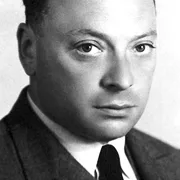 Wolfgang Pauli
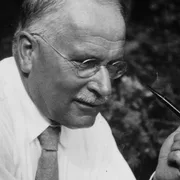 Carl Jung
What consciousness is
Consciousness is one of two complementary aspects of a psychophysically neutral, archetypally ordered reality. Phenomenal experience and physical process are equally real and equally derivative.
Mind and body
Mind and matter arise through an epistemic split of an undivided whole. Pauli treats them as complementary in Bohr's sense: mutually exclusive, jointly necessary descriptions, neither reducible to the other.
Mechanism
Complementarity extended from quantum physics to psychology, combined with archetypes as psychophysically neutral ordering operators that Pauli described as statistical laws with primary probabilities.
Core claims
- Pauli holds that mind and matter are two complementary aspects of one psychophysically neutral reality, the unus mundus.
- Becoming conscious of an unconscious content alters it, which Pauli compares to measurement disturbing a quantum system.
- Archetypes order both psyche and matter, and Pauli cited Kepler's use of archetypal images to explain the fit between mathematics and nature.
- Synchronicities are rare, meaningful, acausal coincidences that Pauli treated as special cases of more general acausal dispositions.
Criticisms
Because the neutral domain is inaccessible in principle, the view resists direct test and risks explanatory emptiness. The archetypes it relies on are formally underspecified, and the synchronicity component, on which Pauli placed considerable weight, is empirically contested.
Implications
- Meaning and purpose: Cosmic/Ultimate
- Pauli speculated about a law of nature grounded in meaning and saw archetypes ordering both mind and matter, which gives meaning a place in nature beyond human concerns.
Related theories
- Jung's Collective Unconscious and Synchronicity (Foundation)
- Atmanspacher's Dual-Aspect Monism (Extension)
- James’s Radical Empiricism of Monistic Pure Experience (Contrast)
- Russellian Monism (Contrast)
Sources
- The Influence of Archetypal Ideas on the Scientific Theories of Kepler, Wolfgang Pauli (1952)
- The Interpretation of Nature and the Psyche, Carl Jung & Wolfgang Pauli (1955)
- Atomic Physics and Human Knowledge, Niels Bohr (1958)
- Writings on Physics and Philosophy, Wolfgang Pauli (C. P. Enz & K. von Meyenn, Eds.) (1994)
- Atom and Archetype: The Pauli/Jung Letters, 1932–1958, C. A. Meier (Ed.) (2001)
- Pauli's Ideas on Mind and Matter in the Context of Contemporary Science, H. Atmanspacher & H. Primas (2006)
- A New Idea of Reality: Pauli on the Unity of Mind and Matter, W. Seager (2011)
- Dual-Aspect Monism à la Pauli and Jung, H. Atmanspacher (2012)
- The Pauli–Jung Conjecture and Its Impact Today, H. Atmanspacher & C. A. Fuchs (Eds.) (2014)
- The Pauli–Jung Conjecture and Its Relatives: A Formally Augmented Outline, H. Atmanspacher (2020)
Explore all theories on the Consciousness Atlas · Compare Pauli’s One World, Two Aspects: Psychophysical Complementarity with other theories · Which theory of consciousness fits you?