
Petitmengin’s Micro-Phenomenology
Phenomenology
Consciousness as Describable Micro-Dynamics of Lived Experience
Claire Petitmengin holds that lived experience has a fine-grained micro-dynamics (pre-reflective, bodily, affective, temporal, gestural) that normally goes unnoticed but can be described precisely under guided conditions. Her micro-phenomenological interview leads a person back to one specific past moment and uses content-empty questions to draw out how it unfolded, without suggesting what will be found. The aim is first-person data rigorous enough to constrain, and be constrained by, neuroscience.
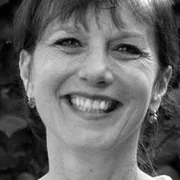 Claire Petitmengin
What consciousness is
Petitmengin makes an epistemic claim, not a metaphysical one: phenomenal consciousness has a describable micro-dynamics, a pre-reflective layer through which any perception, thought, or feeling emerges.
Mind and body
First-person and third-person analyses are meant to guide and determine one another, which Petitmengin hopes may shed light on the explanatory gap. She proposes no metaphysics of the relation.
Mechanism
Guided evocation with content-empty questions, which aims to bypass the opinions and reconstructions that make ordinary introspective reports unreliable.
Core claims
- Guided interviews reveal fine-grained structure in experiences that people ordinarily report as simple.
- Generic experiential structures recur across subjects and domains beneath the specific content of each episode.
- With neurologists, Petitmengin used interviews to detect pre-reflective changes preceding epileptic seizures that patients had never articulated, and paired them with analysis of preictal brain activity.
- Petitmengin and Michel Bitbol argue that standard objections to introspection target naïve inner observation, not mediated, evocation-based access.
Criticisms
Critics note that the constraint between experiential and neural levels in the seizure studies remains programmatic, without an explicit explanatory model. After exchanges with Dan Zahavi, some practitioners dropped the term ‘pre-reflective’, which classical phenomenology reserves for self-awareness that reflection cannot retrieve.
Related theories
- Varela's Neurophenomenology (Foundation)
- Bitbol's Radical Neurophenomenology (Overlap)
- Zahavi’s Pre-Reflective For-Me-Ness (Critique)
- Schwitzgebel's Unreliable Introspection, Indeterminate Boundaries, Metaphysical Humility (Contrast)
Sources
- Describing one's subjective experience in the second person: an interview method for the science of consciousness, Claire Petitmengin (2006)
- Towards the source of thoughts: the gestural and transmodal dimension of lived experience, Claire Petitmengin (2007)
- Anticipating seizure: pre-reflective experience at the center of neuro-phenomenology, Claire Petitmengin, V. Navarro, and M. Le Van Quyen (2007)
- The validity of first-person descriptions as authenticity and coherence, Claire Petitmengin and Michel Bitbol (2009)
- Description of the experience of experiencing: a reply to commentators, Claire Petitmengin (2011)
- Varieties of reflection, Dan Zahavi (2011)
- The lived experience of remembering a ‘good’ interview: micro-phenomenology applied to itself, K. Heimann et al. (2022)
- Petitmengin’s Micro-Phenomenology, Landscape of Consciousness (Closer To Truth)
Explore all theories on the Consciousness Atlas · Compare Petitmengin’s Micro-Phenomenology with other theories · Which theory of consciousness fits you?