
Penrose-Hameroff’s Orchestrated Objective Reduction
Quantum › Orchestrated Objective Reduction
Consciousness as Orchestrated Objective Reduction in Microtubules
This theory posits that consciousness arises from non-computational, gravitation-mediated objective reduction (OR) of quantum superpositions occurring within the protein structures (microtubules) inside brain neurons. This process, termed Orchestrated Objective Reduction (Orch OR), bridges the gap between quantum mechanics and classical reality to produce phenomenal experience.
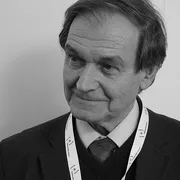 Roger Penrose
 Stuart Hameroff
What consciousness is
Consciousness is identified as a non-computational physical process—the specific orchestration of gravitation-mediated objective reduction of quantum states linked to the fine-scale structure of spacetime geometry. Proto-conscious moments are fundamental and ubiquitous in the universe.
Mind and body
Consciousness is non-computational physics. The brain's microtubules act as a mechanism to orchestrate proto-conscious quantum activity into coherent, rich conscious experiences, requiring a physics beyond current understanding.
Mechanism
Orchestrated Objective Reduction (Orch OR), where non-computational, instantaneous quantum state collapse is leveraged by coherent quantum activity sustained within microtubule lattices.
Core claims
- Consciousness requires a non-computational physical process beyond today's physics (quantum gravity).
- Orch OR in neuronal microtubules is the specific mechanism generating conscious experience.
- The theory accounts for cognitive binding and non-computable conscious choice.
- Anesthetic effects and the unique quantum properties of tubulin support the role of microtubules.
Criticisms
The main tension is the challenge of maintaining quantum coherence for biological timescales in the hot, wet environment of the brain (environmental decoherence). The theory also requires non-existent physics (quantum gravity).
Implications
- AI consciousness: No
- Consciousness is fundamentally non-computational and relies on specific biological quantum processes (Orch OR in microtubules); digital simulation cannot replicate true sentience.
- Survival beyond death: Possible
- As a non-local quantum process in spacetime geometry, consciousness provides a potentially plausible mechanism for phenomena like near-death experiences, the afterlife, and reincarnation.
- Meaning and purpose: Cosmic/Ultimate
- Proto-conscious moments are fundamental and ubiquitous, linking consciousness to the fine-scale structure of reality, suggesting inherent cosmic relevance and possibly enabling evolution itself.
- Virtual immortality: Conditional
- Mind uploading requires recreating consciousness in an artificial medium (e.g., carbon nanotubes) that possesses the necessary quantum physical properties to sustain and orchestrate objective reduction events.
Related theories
- Integrated Information Theory (Critique/Contrast)
- Beck-Eccles's Quantum Processes in the Synapse (Overlap)
- Bohm's Implicate-Explicate Order (Influence)
Sources
- Shadows of the Mind: A Search for the Missing Science of Consciousness, Roger Penrose (1996)
- Conscious., Microtub. ‘Orch OR’, Stuart Hameroff (2014)
- Consciousness & new physics, Roger Penrose (2023)
- Consciousness came before life, Stuart Hameroff, et al. (2024)
Explore all theories on the Consciousness Atlas · Compare Penrose-Hameroff’s Orchestrated Objective Reduction with other theories · Which theory of consciousness fits you?