
Dynamic Organicity Theory (DOT)
Quantum › Dynamic Organicity (Quantum Biological)
Consciousness as Functionality of Multiscale Complexity
This is a quantum biological theory, rooted in Type-B materialism, which models consciousness using a multiscalar temporal-topological framework. Consciousness is claimed to arise spontaneously when the functionality of multiscale complexity in a living negentropic state of the brain exceeds the functionality derived from maximum complexity.
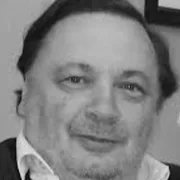 Roman Poznanski
What consciousness is
Consciousness is identified as the unique biological realization of physical processes in the brain, arising when the functionality of multiscale complexity ($F_{MultiComplexity}$) exceeds the functionality of maximum complexity ($F_{MaxComplexity}$)
Mind and body
Consciousness is a physical process, but epistemically objective knowledge alone does not define physicalism. The theory employs self-referential dynamical pathways to establish consciousness within the material brain.
Mechanism
Consciousness arises when $F_{MultiComplexity} > F_{MaxComplexity}$. This required functionality increase is provided by an additional degree of freedom made possible by quantum biological effects imposed by the brain's living negentropic state.
Core claims
- Consciousness is a quantum biological theory based on a multiscalar temporal-topological framework.
- Consciousness arises only when $F_{MultiComplexity} > F_{MaxComplexity}$.
- The functionality increase is derived from an additional degree of freedom due to quantum biology in a living negentropic state.
- Intentionality is the output, serving as instruction for path selection, giving rise to a sense of self.
Criticisms
The condition $F_{MultiComplexity} > F_{MaxComplexity}$ is established only as necessary, not sufficient. The rejection of traditional phenomenological properties (qualia) is a major tension with other theories of consciousness.
Implications
- AI consciousness: Conditional
- As a Type-B materialist, consciousness is a physical process. If artificial systems could successfully replicate the complex functional architecture, multiscale dynamics, and utilize the quantum biological degrees of freedom required for $F_{MultiComplexity} > F_{MaxComplexity}$, then consciousness would emerge.
- Survival beyond death: Unlikely
- Consciousness is dependent on the 'living negentropic state' and specific dynamics of the material brain; survival independent of this organic system is not supported by the core tenets of the theory's materialism.
- Meaning and purpose: Humanistic only
- The theory focuses on biological and functional efficiency, identifying internal intentionality as guidance for action, which provides a sense of self and purpose, but entails no external or cosmic teleology.
- Virtual immortality: Possible
- Virtual immortality is possible if the underlying biological and quantum-functional constraints required for generating $F_{MultiComplexity} > F_{MaxComplexity}$ could be successfully duplicated and instantiated in a non-biological medium, enabling the replication of the conscious self.
Related theories
- Integrated Information Theory (Contrast)
- Type-B Materialism (Basis)
- Functionalism (Critique)
- Quantum & Dimensions (Overlap)
Sources
- The dynamic organicity theory of consciousness: how consciousness arises from the functionality of multiscale complexity in the material brain, Roman Poznanski (2024)
- Consciousness and its place in nature, David Chalmers (2003)
Explore all theories on the Consciousness Atlas · Compare Dynamic Organicity Theory (DOT) with other theories · Which theory of consciousness fits you?