
Pylkkänen’s Quantum Potential Energy and Active Information
Quantum › Quantum Information
Consciousness Reflects Quantum Holism and Active Information
This theory proposes that the mechanism of consciousness is rooted in a fundamental expansion of physical reality derived from quantum theory. Consciousness is attributed to dynamic, holistic quantum processes, specifically via quantum potential energy carrying 'active information,' which complements classical neurological mechanisms that are viewed as a shadow of this deeper reality.
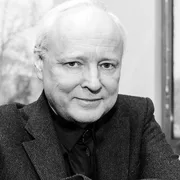 Paavo Pylkkänen
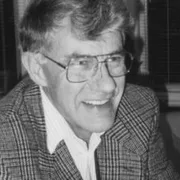 Basil Hiley
What consciousness is
Consciousness reflects the dynamic and holistic quantum physical processes, where neurophysiological processes are a 'shadow' of this underlying, deeper level where mind and experience unfold. Active information, carried by quantum potential energy, plays a non-mechanical role.
Mind and body
Mind/conscious experience reflects deeper, holistic quantum physical processes, while measured neurophysiological processes are a macroscopic manifestation ('shadow') of these underlying dynamics. The fundamental relationship is non-mechanical.
Mechanism
The central mechanism is the introduction of active information and quantum potential energy into the physical description of reality, enabling non-mechanical, holistic dynamics that are complementary to classical neurophysiology.
Core claims
- Conscious experience reflects underlying dynamic and holistic quantum physical processes in the brain.
- Quantum reality involves quantum potential energy carrying active information, fundamentally altering the notion of matter.
- The human brain could operate in some ways analogously to a quantum measuring apparatus.
Criticisms
The core mechanism relies on a non-standard interpretation of quantum mechanics (Bohm-Hiley) and requires a controversial fundamental change in the definition of matter (incorporation of active information).
Implications
- AI consciousness: Conditional
- Consciousness is possible only if artificial substrates are capable of hosting and utilizing the non-mechanical processes derived from quantum potential energy and active information dynamics, which requires highly advanced or non-standard physics/engineering.
- Survival beyond death: Possible
- Consciousness is rooted in a deeper, holistic 'implicate' order, of which the physical brain is merely a shadow. This separation of the mental essence from the mechanistic brain suggests potential persistence beyond biological dissolution.
- Meaning and purpose: Uncertain
- By proposing a fundamentally holistic, non-mechanical dimension of reality (active information) which consciousness reflects, it opens the possibility for inherent cosmic meaning beyond classical mechanistic nihilism.
- Virtual immortality: Conditional
- Virtual immortality requires not just simulating the classical brain activity (the shadow), but engineering a non-biological system capable of replicating and sustaining the specific non-mechanical active information dynamics necessary for the first-person experience.
Related theories
- Bohm's Implicate-Explicate Order (Influence)
- Penrose-Hameroff's Orchestrated Objective Reduction (Related)
- McFadden's Conscious Electromagnetic Information Theory (Related)
Sources
- Mind, Matter and the Implicate Order (2007)
- Quantum theories of consciousness, P. Pylkkänen (2018)
- Can quantum mechanics solve the hard problem of consciousness, B. Hiley and P. Pylkkänen (2022)
- Quantum theory and the place of mind in the causal order of things, P. Pylkkänen (2019)
Explore all theories on the Consciousness Atlas · Compare Pylkkänen’s Quantum Potential Energy and Active Information with other theories · Which theory of consciousness fits you?