
Torday’s Cellular and Cosmic Consciousness
Quantum › Quantum
Cellular Consciousness linked by Quantum Entanglement to the Cosmos
This theory proposes that consciousness is a two-tiered system derived fundamentally from physiology and stored as cellular physiologic data within and between cells. It suggests that consciousness operates based on principles of classical physics and quantum mechanics, linking local consciousness via quantum entanglement to a non-local cosmic consciousness.
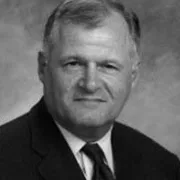 John Torday
What consciousness is
Consciousness is identified as stored cellular physiologic memory and data (derived from the First Principles of Physiology: negative entropy, chemiosmosis, and homeostasis), retrieved by the central nervous system (CNS) as an algorithm for thought.
Mind and body
Mind (consciousness) is derivative from physiology (cell biology) and stored within and between cells. This link is bridged at a fundamental level by quantum entanglement, which connects the local physical state to non-local cosmic consciousness.
Mechanism
Quantum entanglement integral to physiology, linking local cellular memory (derived from physiological control mechanisms like homeostasis and negative entropy) with non-local cosmic consciousness, and retrieved by the CNS as an algorithm.
Core claims
- Consciousness is a two-tiered system derived from physiological control mechanisms (negative entropy, chemiosmosis, homeostasis).
- Consciousness is stored as local cellular memory and retrieved by the CNS as an algorithm for thought.
- Quantum entanglement is integral to physiology and links local consciousness to non-local cosmic consciousness.
- Transcendent experiences (NDEs, lucid dreaming) demonstrate movement toward the non-local conscious state.
Criticisms
The source does not explicitly list criticisms. Justification: Likely faces critiques common to other quantum consciousness theories, especially regarding how quantum entanglement (a highly sensitive state) remains coherent and functional within the 'hot, wet' biological brain environment.
Implications
- AI consciousness: Conditional
- If consciousness is rooted in the unique 'First Principles of Physiology' (negative entropy, chemiosmosis, homeostasis) and dependent on quantum entanglement integral to biological cells, artificial systems would need to replicate or simulate these precise biological and quantum processes to achieve consciousness. This possibility is conceptually uncertain.
- Survival beyond death: Yes
- The theory posits that local physiologic memories are paired with non-local memories that 'dwell in cosmic consciousness'. Survival beyond the local biological substrate is suggested, particularly in a non-local or cosmic sense.
- Meaning and purpose: Cosmic/Ultimate
- Consciousness is linked to the non-local consciousness of the cosmos. The evolutionary goal is transcendence, moving closer to the non-local state, implying an ultimate, inherent cosmic purpose.
- Virtual immortality: Conditional
- Virtual immortality would require replicating the specific quantum-physiological mechanisms of the cell and ensuring the virtual environment maintained the connection to the non-local cosmic consciousness via quantum entanglement, which is currently unknown if technologically manipulable.
Related theories
- Penrose-Hameroff's Orchestrated Objective Reduction (Overlap)
- Faggin's Quantum Information-based Panpsychism (Overlap)
- Pribram's Holonomic Brain Theory (Compatible)
- Cosmopsychism (Overlap)
Sources
- Consciousness, embodied quantum entanglement (2023)
- Evolution, gravity, and the topology of consciousness (2022)
- The holism of cosmology and consciousness (2023)
- The mobius strip, the cell, and soft logic mathematics (2024)
Explore all theories on the Consciousness Atlas · Compare Torday’s Cellular and Cosmic Consciousness with other theories · Which theory of consciousness fits you?