
Psychedelic Theories of Consciousness
Anomalous › Psychedelic Consciousness
Consciousness as Altered State Epistemology
This area of study examines consciousness insights derived from states induced by psychedelic drugs. While proponents often use the profound, mystical, and altered experiences (e.g., sense of oneness, ego dissolution) to support non-materialist views like panpsychism or idealism, mainstream science uses the associated neurobiological data (like increased brain entropy or synchronized neural activity) to advance materialist models like the Entropic Brain Hypothesis.
 Robin Carhart-Harris
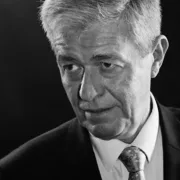 Karl Friston
 Peter Sjöstedt-Hughes
 Aldous Huxley
What consciousness is
The core claim is epistemological: studying disruptions to consciousness reveals the underlying mechanisms of normal consciousness (Physicalist view), or unveils the fundamental nature of reality (Non-Physicalist view), rather than positing a unique identity for consciousness itself.
Mind and body
Dual interpretation. Physicalist models see the phenomenal state as a correlate of specific neurodynamic disruption (e.g., DMN collapse). Non-physicalist views posit the brain acts as a filter that is temporarily inhibited by the drug, allowing access to a non-local/fundamental consciousness.
Mechanism
Modulation of high-level beliefs/priors via neurotransmitters (REBUS model) leading to increased brain entropy and chaotic (critical) dynamics, resembling a primitive or primary state of consciousness.
Core claims
- Psychedelic states correlate with elevated brain entropy and criticality.
- The experience is associated with reduced activity in cortical networks, including the DMN.
- LSD and ketamine induce synchronized neural oscillation patterns across the brain.
- Mystical experiences triggered by psilocybin correlate with therapeutic outcomes like reduced depression and anxiety.
Criticisms
The primary philosophical critique is that the profound subjective nature of the experience does not guarantee ontological truth (epistemic vacuity). Neurobiological critique argues that high entropy may simply be functional 'brain noise' rather than a revelation of fundamental consciousness.
Implications
- AI consciousness: Conditional
- If consciousness is derived from complex, dynamic, and chaotic organizational states (like high entropy), AI could potentially replicate these structures. However, non-materialist interpretations derived from mystical experiences often reject computational sufficiency.
- Survival beyond death: Conditional
- The intense experiences, often similar to NDEs and involving ego dissolution and 'oneness,' are interpreted by some adherents as evidence of non-local consciousness that persists independently of the body and brain.
- Meaning and purpose: Uncertain
- Psychedelic experiences often induce profound mystical and spiritual states that lead to transformative personal meaning, enhanced compassion, and changes in belief systems, serving a crucial psychological and existential function.
- Virtual immortality: Uncertain
- If consciousness is a neurodynamic pattern (Physicalist view), it might be replicable. If it is fundamental/spiritual (Idealist view), it already persists beyond death, making digital simulation unnecessary.
Related theories
- Carhart-Harris's Entropic Brain Hypothesis (Extension)
- Friston's Free-Energy Principle and Active Inference (Extension)
- Near Death Experiences, Survival, Past Lives (Overlap)
- Idealism (Compatible)
Sources
- The entropic brain—revisited, R.L. Carhart-Harris (2018)
- REBUS and the anarchic brain: toward a unified model of the brain action of psychedelics, R.L. Carhart-Harris and K.J. Friston (2019)
- A whole-brain model of the neural entropy increase elicited by psychedelic drugs, R. Herzog et al. (2023)
- On the need for metaphysics in psychedelic therapy and research, P. Sjöstedt-Hughes (2023)
Explore all theories on the Consciousness Atlas · Compare Psychedelic Theories of Consciousness with other theories · Which theory of consciousness fits you?