
Realms of the Soul Theory
Dualism › Traditional/Metaphysical Concept
Consciousness as Derivative of Multi-Level Nonphysical Soul
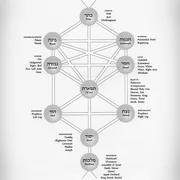
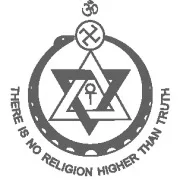
This framework, common across mystical and religious traditions, posits that the individual soul is a permanent, nonphysical entity that exists in multiple dimensions or levels before, during, and after physical life. The core conscious experience is considered derivative of this primitive, nonphysical soul substance, thereby establishing consciousness itself as nonphysical.
 Yogācāra Buddhism
 Sufism in Islam
 Kabbalah in Judaism
 Christian Mysticism
 Theosophy
What consciousness is
Consciousness is derivative of the nonphysical soul or spirit, which is defined as a permanent, primitive entity (a nonphysical substance).
Mind and body
Interactionist/Correlational. The mind (soul) is the nonphysical substance, while the body is physical. The nature of their interaction is complex, often mysterious, but their persistence beyond physical dissolution is assumed.
Mechanism
The principle is the persistence and spiritual progression of the nonphysical soul entity through elaborate levels or realms of existence before and after physical life.
Core claims
- The soul is a nonphysical substance that is primitive and permanent, making personal consciousness nonphysical.
- The soul exists in elaborate levels, stages, or realms, accommodating pre-birth and post-death journeys.
- This view is consistent with NDEs and OBEs, which are sometimes interpreted as verifiable experiences of disembodied consciousness.
Criticisms
Suffers from the fundamental philosophical problems associated with substance dualism, including the causal interaction problem (how the nonphysical soul interacts with the physical body) and lack of parsimony. It is often dismissed by mainstream scientific and philosophical communities as non-rational or mythological.
Implications
- AI consciousness: Unlikely
- If consciousness requires a radically separate, nonphysical substance (soul) that is typically created or allocated by God or predetermined laws, artificial systems cannot instantiate true inner awareness. Emergent dualism could be an exception, but this traditional view usually implies divine or natural allocation.
- Survival beyond death: Yes
- Dualism provides the clearest mechanism for survival because the nonphysical soul/spirit is independent of the body, allowing for post-mortem existence and journeys through various multi-dimensional realms (such as resurrection or reincarnation).
- Meaning and purpose: Cosmic/Ultimate
- As a form of religious or traditional dualism, this view inherently links consciousness to a nonphysical or divine ultimate reality, providing ultimate meaning, purpose, and value tied to the soul's eternal journey or destiny.
- Virtual immortality: Not needed
- Since the nonphysical soul is the true self and is permanent, achieving 'real' survival beyond death, a virtual or simulated duplication of the mind in a machine would be moot or unnecessary.
Related theories
- Dualism (General Category/Type)
- Theosophy's Eclectic Soul and Consciousness (Example/Extension)
- Kabbalah of Information (Example/Extension)
- Near Death Experiences, Survival, Past Lives (Supporting Evidence/Correlation)
Sources
- Realms of the Soul (Section 15.17)
- Theosophy Wiki: Soul (2023)
- From Infinity to Man: the Fundamental Ideas of Kabbalah within the Framework of Information Theory and Quantum Physics, Eduard Shyfrin (2019)
Explore all theories on the Consciousness Atlas · Compare Realms of the Soul Theory with other theories · Which theory of consciousness fits you?