
Nyāya’s Contingent Consciousness of the Enduring Self
Dualism
Consciousness as a Passing Quality of a Non-Conscious Self
Nyāya holds that each person is an eternal, all-pervading, nonphysical self (ātman) that is not conscious by nature. Cognition, pleasure, pain, desire, aversion, and volition are contingent qualities that arise in the self only when it is linked through the inner organ (manas) to the senses, body, and objects. A cognition reveals its object but not itself; knowing that one knows takes a second, later inner perception.
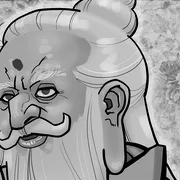 Gautama (Akṣapāda)VātsyāyanaGaṅgeśaBhāsarvajña
What consciousness is
Consciousness is a set of adventitious qualities (āgantuka guṇa), chiefly awareness (jñāna) and felt affect, that inhere in a nonphysical self without being its essence.
Mind and body
Mental qualities need a substrate, and no configuration of earth, water, fire, or air can bear them, so Nyāya infers a nonphysical self. The body, senses, and manas are causal conditions for experience, not its bearer.
Mechanism
Consciousness as a quality produced by contact among self, manas, sense, and object, combined with an extrinsic higher-order account of introspection.
Core claims
- Mental qualities require a substrate, and no material element can bear them, so the self is a nonphysical substance.
- The self is not conscious in itself and persists without consciousness in dreamless sleep and liberation.
- We do not experience through all five senses at once, so manas must be atomic and work one stream at a time.
- A cognition does not reveal itself; awareness of it is a further inner perception, possible for any cognition but required for none, which blocks a regress.
Criticisms
Dignāga and Dharmakīrti held that cognition is reflexively self-aware and charged that Nyāya’s view either regresses or leaves the first cognition unknown and unrememberable. Śaṅkara held awareness self-luminous and identical with the self. Advaita critics said a liberated Nyāya self is no different from a stone, and Bhāsarvajña dissented within Nyāya by allowing liberated bliss; Chadha questions whether the arguments establish a substantial self or only a minimal one.
Implications
- AI consciousness: No
- Since consciousness can only inhere in a nonphysical self, a material artifact cannot bear it.
- Survival beyond death: Yes
- The self is eternal and manas carries memory traces across lives, so the subject survives death; in final liberation the self survives but consciousness ceases.
- Meaning and purpose: Cosmic/Ultimate
- Nyāya’s psychology serves a path to liberation, the absolute cessation of suffering and rebirth.
- Virtual immortality: No
- Experience belongs to a nonphysical self, so copying bodily or neural patterns would not continue the person.
Related theories
- Sāṃkhya's Pure Witness and the Material Mind (Contrast)
- Śaṅkara's Self-Luminous Nondualism (Critique)
- Buddhism's Empty, Illusory Phenomenal Consciousness (Contrast)
- Rosenthal’s Higher-Order Thought (Overlap)
Sources
- The Nyāya-sūtra: Selections with Early Commentaries, Gautama (trans. M. R. Dasti and S. H. Phillips) (2017)
- Classical Indian Philosophy of Mind: The Nyāya Dualist Tradition, K. K. Chakrabarti (1999)
- Nyāya’s Self as Agent and Knower, M. R. Dasti (2013)
- Perception: An Essay on Classical Indian Theories of Knowledge, B. K. Matilal (1986)
- Epistemology in Classical India: The Knowledge Sources of the Nyāya School, S. H. Phillips (2012)
- The Self in Early Nyāya: A Minimal Conclusion, M. Chadha (2013)
- Cross-Modality and the Self, J. Ganeri (2000)
Explore all theories on the Consciousness Atlas · Compare Nyāya’s Contingent Consciousness of the Enduring Self with other theories · Which theory of consciousness fits you?